Choosing a business bank account in the UK sounds simple until you actually start comparing the options.
There are high-street banks, digital banks, and fintech platforms, all offering different fees and features. Some are made for businesses which mainly work in the UK, while others make more sense when you’re dealing with customers, suppliers, or partners overseas.
The right account depends on how your business handles money today and where you expect it to go next.
A business bank account is opened in the name of a business rather than an individual. Keeping business finances separate from personal spending makes accounting and tax reporting easier and also gives you access to features designed for business use.
For UK limited companies, having a separate business account is a legal requirement. Sole traders and freelancers can use a personal account, but separating business transactions from personal spending can save a lot of hassle later.
With that in mind, let’s look at 10 leading business account options highlighted in the source.
The 10 Best UK Business Bank Accounts
1. Airwallex
Airwallex is designed with internationally focused businesses in mind.
Its business account combines multi-currency accounts, international payments, corporate cards, expense management, and accounting and ecommerce integrations. The source lists support for more than 23 currencies and pricing from £19 per month.
Airwallex also provides local account details in more than 60 countries and offers competitive foreign-exchange rates. It connects with tools including Xero, QuickBooks, NetSuite, and Shopify.
For a business that regularly moves money across borders, having these services together can be much easier than managing several separate accounts.
2. Wise
Wise is another popular choice for businesses that regularly send and receive money internationally.
It supports more than 40 currencies and uses the mid-market exchange rate, although transfer fees still apply. The source lists a £45 one-time fee and no monthly account charge.
That straightforward pricing can be attractive to businesses that mainly care about international transfers and currency conversion.
The trade-off is that Wise does not offer a dedicated account manager, which may matter more as a business becomes larger or more complex.
3. Revolut
Revolut takes a more feature-heavy approach.
Its business accounts include multi-currency wallets, corporate cards, and expense management tools. The source lists plans starting at around £10 per month, with higher plans costing £90 or more.
Revolut supports more than 25 currencies and integrates with accounting platforms such as Xero, QuickBooks, Sage, and FreeAgent.
One small detail that is easy to overlook is the weekend foreign-exchange surcharge mentioned in the source. Revolut applies a 1% surcharge to FX conversions during weekends, so businesses making frequent currency exchanges should factor that into their costs.
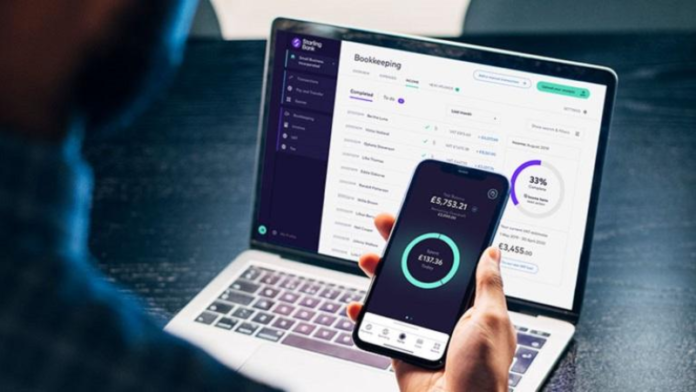
4. Starling
Starling is a mobile-first business banking option which appeals to many UK-focused small businesses.
Its core GBP account is free, and it works with accounting tools including Xero, QuickBooks, and FreeAgent.
Starling also offers savings spaces and a Business Toolkit for invoicing and bookkeeping.
It is worth noting that its multi-currency offering is more limited than some fintech competitors, so businesses with substantial international activity may need to look elsewhere.
5. Tide
Tide is aimed mainly at sole traders and small businesses in the UK.
The basic account is free, and the platform includes invoicing and accounting integrations with services such as Xero, QuickBooks, and Sage.
The main limitation is its focus on GBP. That makes Tide a better fit for businesses that mainly operate in the UK rather than companies regularly dealing with multiple currencies.
For someone who wants straightforward digital business banking without paying for international features they will never use, that simplicity may be exactly the point.
6. Monzo
Monzo Business offers free and paid plans and includes useful features such as invoicing and tax pots.
Tax pots can help business owners set money aside for future tax bills instead of having to work it out manually later.
The source also notes that Monzo holds a full UK banking licence, with FSCS protection up to £120,000.
Its international support is more limited, so Monzo makes more sense for businesses whose financial activity is mainly UK-based.
7. Payoneer
Payoneer is built around international payments, particularly for businesses and freelancers working with global marketplaces.
The platform can be useful for people receiving funds from services such as Amazon, Fiverr, and Upwork. The source lists receiving accounts in 10 currencies, while payments can be supported across 70 currencies.
There is an annual fee of US29.95whenlessthanUS6,000 is received within a 12-month period.
Its international focus is useful, but the source also notes that its foreign-exchange markup can be higher than some competing options.
8. HSBC
HSBC offers the traditional banking experience many established businesses still prefer.
Its business services include current accounts, savings, loans, overdrafts, and trade finance. The bank also has an extensive international presence, including strong connections across Asia.
The source lists a 12-month free period, followed by a £10 monthly fee.
The advantage of going with a traditional bank is not necessarily the cheapest international pricing. Instead, businesses may value branch access, lending, and a wider range of conventional banking services.
9. Barclays
Barclays is another long-established UK bank offering business accounts alongside lending and merchant services.
The source lists a 12-month free period followed by an £8.50 monthly fee. It also offers merchant services for businesses that need to accept card payments.
Barclays also provides sector-specific services for different types of businesses.
International costs are something to watch, however, with the source listing an FX markup of around 2.75% plus a £25 transfer fee.
10. Lloyds and NatWest
Lloyds and NatWest are both familiar names for UK businesses that want traditional banking services.
Lloyds offers support for GBP, EUR, and USD and has accounting integrations with popular business software. The source lists an £8.50 monthly fee after the first 12 months, with FX margins ranging from 0.85% to 2.6%.
NatWest provides business accounts, funding options, and sector-focused financial advice. Its account is listed as free, although foreign-exchange margins can be considerably higher for some currencies.
Both are worth considering for businesses that prefer a conventional banking relationship.
What should you look for in a UK business bank account?

The lowest monthly fee is not necessarily the lowest overall cost.
A business might pay nothing for the account but lose far more through transaction charges, international transfer fees, or expensive currency conversion.
Start by looking at the full fee structure. If you trade internationally, pay particular attention to the exchange rate and any markup added above the interbank rate.
Multi-currency support can also make a noticeable difference. Holding the currencies you actually use can reduce unnecessary conversions and make cash flow easier to manage.
Then there are accounting integrations. Connecting your account to software such as Xero or QuickBooks means fewer transactions have to be entered manually, which can save time and reduce errors.
Finally, think beyond today. An account that works perfectly for a one-person business may become frustrating once you have employees, higher payment volumes, or international customers.
Business bank account vs business account
It is also worth understanding that not every “business account” comes from a bank.
A traditional business bank account is provided by a licensed bank and can offer services such as lending and overdrafts. A business account from an e-money institution can still allow you to hold funds and make payments, but it operates under a different regulatory structure.
The source notes that bank deposits can receive FSCS protection, while e-money providers safeguard customer funds in separate ring-fenced accounts.
That difference is worth understanding before opening an account.
Which account suits your business?
A freelancer or sole trader working entirely in the UK may not need a complicated setup. A free account from Starling, Tide, or Monzo could cover the basics.
A limited company needs a dedicated business account, and accounting integrations become particularly useful as the company grows.
For ecommerce businesses selling through platforms such as Shopify or Amazon, multi-currency support and international payment features can make daily finances much easier.
Businesses with overseas customers or suppliers should pay close attention to FX costs. A small difference in exchange rates can become significant when large amounts of money move across borders.
How to open a business account in the UK

Most providers now allow businesses to apply online, although some traditional banks may still offer branch-based applications.
Sole traders generally need proof of identity and proof of address. Limited companies may need identification for directors, a certificate of incorporation, and their memorandum and articles of association.
Conclusion
The best UK business bank account is not necessarily the one with the lowest advertised fee. It is the one that fits the way your business actually handles money.
A UK-only freelancer may need little more than a reliable account, simple invoicing, and accounting integration. An international ecommerce company has a completely different set of priorities, including multiple currencies, overseas transfers, and competitive FX rates.
Traditional banks like HSBC, Barclays, Lloyds, and NatWest can provide broader banking services, lending, and established banking relationships.
Digital and fintech providers such as Airwallex, Wise, Revolut, Starling, Tide, Monzo, and Payoneer can offer different combinations of convenience, digital tools, and international functionality.
Before opening an account, look at how much money you send and receive, whether you deal internationally, which accounting software you use, and how quickly you expect the business to grow.
Once you know what your business actually needs, choosing an account becomes much less complicated.
FAQ
What is a business bank account?
A business bank account is opened in the name of a company or business rather than an individual. It helps businesses keep money separate from personal finances.
Do I need a business bank account in the UK?
Limited companies in the UK are required to have their own business account. Sole traders and freelancers can use personal accounts, although keeping business and personal finances separate can make managing your accounts much easier.
What are the best business bank accounts in the UK?
The source compares Airwallex, Wise, Revolut, Starling, Tide, Monzo, Payoneer, HSBC, Barclays, Lloyds, and NatWest. The right option depends on factors such as international payments, fees, currencies, accounting tools, and business needs.
What is the best business account for a small business?
There is no single option for every small business. UK-focused businesses may prefer simple accounts such as Starling, Tide, or Monzo, while companies working internationally may need stronger multi-currency and payment features.
Are there free business bank accounts in the UK?
Yes. The source lists free basic options from providers including Starling, Tide, and Monzo. However, it is important to check transaction limits, international fees, and other charges rather than looking only at the monthly fee.
Which UK business account is best for international payments?
Businesses that regularly deal with overseas customers or suppliers should look for multi-currency support, transparent FX pricing, and access to local payment rails. Airwallex, Wise, Revolut, and Payoneer are among the internationally focused options covered in the source.
What is a multi-currency business account?
A multi-currency account allows a business to hold and manage money in more than one currency. This can reduce unnecessary conversions and make international payments easier to manage.
What documents do I need to open a business account?
Sole traders generally need proof of identity and proof of address. Limited companies may need identification for directors, a certificate of incorporation, and their memorandum and articles of association.
Are business funds protected in an e-money account?
The source explains that e-money providers safeguard customer funds in separate ring-fenced accounts. This differs from bank deposits, where eligible funds can receive FSCS protection.
Is Wise good for small businesses?
Wise can be useful for businesses that regularly send or receive international payments. It offers multi-currency support and transparent exchange rates, although the source notes that it does not provide a dedicated account manager.
Is Monzo good for a UK-focused business?
Monzo Business offers free and paid plans, invoicing, and tax pots. The source also highlights its UK banking licence and FSCS protection, while noting its more limited multi-currency support.