
Nuclear energy is attracting renewed attention from investors. After years of limited growth, nuclear power is once again becoming an important part of the global energy conversation.
One major reason is the rapid expansion of artificial intelligence and data centers. These facilities require enormous amounts of electricity and need reliable power around the clock. Nuclear energy, with its ability to consistently generate large amounts of low-carbon electricity, is increasingly being considered part of the solution.
Governments are also showing greater support for nuclear power, while energy companies and major technology firms are exploring long-term agreements involving nuclear-generated electricity.
For investors, this offers several ways to gain exposure to the nuclear energy industry. You don’t necessarily have to invest directly in a nuclear power plant. Depending on your risk tolerance and investment goals, you can consider uranium mining companies, nuclear utilities, equipment manufacturers, nuclear-focused ETFs, or companies developing next-generation reactors.
But nuclear investing comes with substantial risks, too. Regulatory changes, construction delays, cost overruns, uranium prices, and technological uncertainty can all affect investment returns.
Here’s what you should know before investing in nuclear energy.
What Is Nuclear Energy Investing?
Nuclear energy investing means putting money into companies, funds, or other investments that may benefit from the production, supply, or development of nuclear power.
The nuclear industry is much larger than power-plant operators alone. It includes the entire nuclear fuel and energy ecosystem, including:
- Uranium mining
- Uranium processing and enrichment
- Nuclear reactor design
- Nuclear plant construction
- Nuclear equipment and components
- Electricity generation
- Small modular reactors (SMRs)
- Nuclear-focused ETFs
This gives investors several different ways to participate in the sector.
Why Is Nuclear Energy Getting So Much Attention?
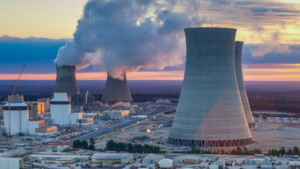
The renewed interest in nuclear power is being driven by several factors.
Growing Electricity Demand
Artificial intelligence is increasing demand for data centers, which consume large amounts of electricity. Unlike some intermittent renewable sources, nuclear plants can provide electricity continuously.
Government Support
Several countries are reconsidering their nuclear strategies as they seek reliable electricity sources while also trying to reduce carbon emissions.
Government support can help nuclear projects move forward, although the sector remains heavily regulated and subject to political decisions.
Aging Nuclear Plants
Many existing nuclear reactors are reaching important points in their operating lives. Extending the life of existing facilities, replacing aging equipment, and developing new reactors could create opportunities for companies throughout the nuclear supply chain.
Interest in Small Modular Reactors
Small modular reactors (SMRs) are under development as a potential alternative to conventional large-scale nuclear power plants.
The concept is relatively straightforward: build smaller reactors that can potentially be manufactured more efficiently and deployed in different locations.
The technology is promising, but investors should remember that many SMR projects are still in development. Commercial success is not guaranteed.
Ways to Invest in Nuclear Energy
There isn’t one single way to invest in nuclear power. The best approach depends on how much risk you’re comfortable taking and how directly you want exposure to the industry.
1. Invest in Uranium Companies
Uranium is the fuel used by most commercial nuclear reactors, making uranium miners one of the most direct ways to gain exposure to nuclear-energy demand.
One well-known example is Cameco Corporation.
Uranium companies can benefit when uranium prices rise or when expectations for future reactor demand increase. However, their share prices can also be volatile.
Investors should therefore look beyond the headline uranium price and consider a company’s production costs, reserves, balance sheet, project pipeline, and geopolitical exposure.
2. Consider Nuclear Power Utilities
Another option is investing in companies that own or operate nuclear power plants.
Constellation Energy is one example of a major U.S. company with significant nuclear-generation capacity.
Utilities can provide a different type of exposure than uranium miners. Their performance can depend on electricity prices, demand, regulation, operating costs, interest rates, and the condition of their nuclear facilities.
This can make nuclear utilities appealing to investors who want exposure to nuclear electricity generation rather than the mining side of the industry.
3. Look at Nuclear-Focused ETFs
If you don’t want to choose individual companies, exchange-traded funds can provide a more diversified approach.
For example, the Global X Uranium ETF (URA) provides exposure to companies involved in the uranium and nuclear energy industries.
The Sprott Uranium Miners ETF (URNM) focuses more heavily on uranium-mining companies.
While ETFs can help reduce the risk associated with holding a single company in your portfolio, diversification cannot completely eliminate investment risk. Even if the overall uranium or nuclear sector performs poorly, the fund can still drop in value.
Before buying an ETF, check its holdings, expense ratio, concentration, liquidity, and investment strategy.
4. Explore Small Modular Reactor Companies
SMRs are one of the most closely watched areas of next-generation nuclear technology.
Companies such as NuScale Power and Oklo are working on advanced reactor technologies.
The potential upside is significant if these technologies become commercially successful. But the risk is also considerably higher.
There are many nuclear technology companies that are still developing their reactors, obtaining approvals, securing customers, or working toward commercial deployment. Investors should be prepared for considerable volatility and the possibility that projects take longer or cost more than expected.
5. Invest in Nuclear Equipment and Technology Companies
Nuclear power plants require much more than uranium and reactors.
The industry depends on companies providing engineering services, turbines, electrical equipment, maintenance, construction, software, and other specialized technologies.
GE Vernova, for example, operates across several energy technologies and can provide investors with broader exposure to the energy infrastructure market.
This approach may appeal to investors who want nuclear exposure without relying entirely on uranium prices or a single reactor technology.
How to Choose a Nuclear Energy Investment
Before buying a nuclear-related stock or ETF, take some time to understand what you’re actually investing in.
Check the Company’s Financial Health
Look at revenue, cash flow, debt, profitability, and how much cash the company has available.
This is especially important with early-stage nuclear companies, which may need additional funding before their projects generate meaningful revenue.
Understand Its Nuclear Exposure
Not every company associated with the energy industry is equally exposed to nuclear power.
Ask yourself:
- How much of the company’s revenue comes from nuclear activities?
- Does it own operating nuclear facilities?
- Is it developing a reactor?
- Does it mine uranium?
- Is nuclear only a small part of its overall business?
Understanding this can help you avoid buying a company simply because it has a connection to the nuclear sector.
Look at the Project Pipeline
For nuclear developers, future projects can be just as important as current operations.
Review the company’s development plans, expected timelines, customers, financing arrangements, and regulatory progress.
A promising reactor design is not necessarily a profitable commercial project.
Consider Valuation
A company can operate in a promising industry and still be an expensive investment.
Compare valuation metrics with the company’s growth prospects, financial position, and competitors rather than assuming that nuclear-energy growth automatically means a stock is a good buy.
What Are the Risks of Investing in Nuclear Energy?
Nuclear power has considerable long-term potential, but investors shouldn’t overlook the risks.
Regulatory Risk
Nuclear energy is highly regulated. A change in safety requirements, licensing decisions, or government policy can affect a company’s projects and costs.
Construction Risk
Large nuclear projects can take many years to complete and may experience delays or significant cost increases.
For investors, a project that takes longer than expected can lead to higher financing requirements and lower returns.
Uranium Price Volatility
Uranium miners can be particularly sensitive to changes in uranium prices.
A rise in expected nuclear demand can push uranium-related stocks higher, but sentiment can change quickly.
Technology Risk
SMRs and advanced reactors are exciting areas of innovation, but many technologies have yet to demonstrate commercial success at scale.
Investors should treat early-stage nuclear companies as higher-risk investments rather than assuming their technology will automatically succeed.
Political Risk
Nuclear energy depends on government policy and public support. Changes in leadership, energy policy, environmental rules, or international relationships can influence the industry.
Concentration Risk
Investing heavily in one uranium company, nuclear developer, or ETF can expose your portfolio to risks specific to that investment.
Diversification can help reduce the impact of a single company or project going wrong.
Nuclear Energy Stocks vs. ETFs: Which Is Better?
The choice between individual stocks and ETFs largely comes down to risk and control.
Individual nuclear stocks give you more direct exposure to a particular company. If that company performs exceptionally well, the potential upside can be significant. However, company-specific risks can also produce substantial losses.
Nuclear ETFs spread your investment across multiple companies. It can easily reduce the impact of one company’s poor performance, although it also means you won’t benefit as much from the success of a single standout stock.
For beginners, a diversified fund may be easier to understand than selecting individual nuclear companies. More experienced investors may prefer individual stocks when they have thoroughly researched a particular company.
How Much Should You Invest in Nuclear Energy?
There is no appropriate percentage for everyone.
Your allocation should depend on your overall portfolio, financial situation, investment objectives, and tolerance for losses.
Rather than deciding on an allocation based solely on how exciting the nuclear-energy outlook appears, consider how the investment fits alongside your existing holdings.
If you already have significant exposure to energy, commodities, technology, or infrastructure companies, adding more nuclear-related investments could increase your sector concentration.
Conclusion
Nuclear energy is once again becoming an important investment theme as electricity demand rises and governments, utilities, and technology companies seek reliable power sources.
Investors can gain exposure in several ways, from uranium miners and nuclear utilities to ETFs, equipment manufacturers, and companies developing small modular reactors.
But a strong industry outlook doesn’t automatically make every nuclear stock a good investment. Some companies have established operations and revenue, while others are still years away from commercial projects.
FAQ
How can beginners invest in nuclear energy?
Beginners can easily gain exposure to nuclear energy through nuclear-focused ETFs, established energy companies, uranium producers, or diversified funds. ETFs may be easier for investors who don’t want to research individual companies.
What is the easiest way to invest in nuclear energy?
For many investors, a diversified nuclear or uranium ETF can be a straightforward way to gain exposure to several companies through a single investment. However, ETFs still carry market and sector-specific risks.
What are nuclear energy ETFs?
Nuclear energy ETFs are investment funds that hold a portfolio of companies in the nuclear energy industry. Depending on the fund, holdings may include uranium miners, reactor suppliers, utilities, and other nuclear-related businesses.
What are small modular reactors?
Small modular reactors, or SMRs, are smaller nuclear reactors designed for more standardized manufacturing and deployment than traditional large reactors. Many SMR technologies are still under development.
Is investing in SMR companies risky?
It can be. Some SMR companies are early-stage businesses that may not yet have commercial reactors operating at scale. Their shares can therefore be considerably more volatile than established energy companies.
Why is AI increasing interest in nuclear energy?
AI data centers require large amounts of reliable electricity. Nuclear plants can provide continuous power, which has increased interest in nuclear energy as electricity demand from AI and other digital infrastructure grows.
Do nuclear energy investments pay dividends?
Some established utilities and energy companies involved in nuclear power pay dividends, but dividend policies vary by company. Early-stage nuclear technology companies generally have different financial profiles and may not pay dividends.
How does uranium affect nuclear energy investments?
Uranium is an essential fuel for conventional nuclear reactors. Changes in uranium prices and expectations for future reactor demand can therefore affect uranium miners and other companies connected to the nuclear fuel cycle.
Can I invest in nuclear energy through a diversified portfolio?
Yes. Nuclear exposure can be combined with investments in other energy sectors, industries, geographic markets, and asset classes. Diversification can help reduce the effect of a downturn in any single sector.
Should I invest in nuclear energy right now?
That depends on your personal financial circumstances, investment goals, risk tolerance, and valuation of the investments you’re considering. Instead of investing solely because nuclear energy is receiving attention, research individual opportunities and consider how they fit into your broader portfolio.