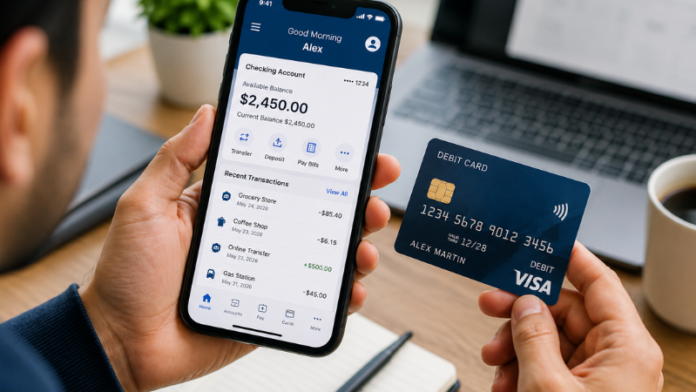
Most of us don’t think much about our checking account until something goes wrong. Maybe it’s an unexpected bank fee, an ATM charge, or a mobile app that refuses to work when you need it most. But since this is the account you’ll probably use every day, choosing the right one can make managing your money a whole lot easier.
Checking accounts will have advanced significantly by 2026. They are now more than just a location to keep your salary. Many now provide budgeting tools, fee-free ATM access, robust mobile banking apps, early direct deposits, and enhanced security measures. There is a checking account made to meet your lifestyle, whether you’re a family managing home bills, a professional getting paid twice a month, or a student creating your first bank account.
In this guide, we’ll explain what a checking account is, the features that actually matter, and how to choose the best option for your everyday banking needs.
What Is a Checking Account?
It has a checking account and is a bank account that is designed for everyday spending and money management. Unlike savings accounts, which are meant for storing money over time, checking accounts give you quick and easy access to your funds whenever you need them.
Most checking accounts come with:
- A debit card
- Online and mobile banking
- Direct deposit
- ATM access
- Bill payment services
- Money transfers
Whether you’re buying groceries, paying rent, or splitting a restaurant bill with friends, your checking account is probably involved.
What Makes a Great Checking Account in 2026?
Banks compete much harder today than they did just a few years ago. Instead of focusing only on free debit cards, they’re offering features that genuinely make banking easier.
Here are the features worth paying attention to.
No Monthly Maintenance Fees
Nobody likes paying simply to keep their own money in a bank.
Many online banks now completely eliminate monthly maintenance fees, while traditional banks often waive them if you meet certain conditions, such as receiving a direct deposit or maintaining a minimum balance.
If you can avoid these fees entirely, that’s money staying in your pocket.
Easy Mobile Banking
Your bank’s mobile app has become almost as important as the bank itself.
A good banking app should let you:
- Deposit checks with your phone
- Transfer money instantly
- Lock or unlock your debit card.
- Track spending
- Pay bills
- Receive transaction alerts
The easier the app is to use, the easier it becomes to stay on top of your finances.
Large ATM Network
Even though digital payments are everywhere, there are still times when you need cash.
A checking account with thousands of fee-free ATMs can save you from paying unnecessary withdrawal charges every time you need money.
Some online banks even reimburse ATM fees charged by other banks.
Early Direct Deposit
One of the most popular banking features in 2026 is early paycheck access.
Instead of waiting until Friday, many banks now make your salary available up to two days earlier whenever your employer sends payroll information ahead of schedule.
It doesn’t increase your income, but it certainly improves cash flow.
Strong Security
Online banking has become incredibly convenient, but security matters more than ever.
Look for banks that offer:
- Two-factor authentication
- Instant fraud alerts
- Biometric login
- Card freezing
- Zero liability protection
These features provide extra peace of mind if your card is ever lost or stolen.
Best Checking Accounts for Different Types of People
The “best” checking account depends on how you actually use your money.
Students
Students usually have simple banking needs.
A student-friendly checking account should include:
- No monthly fees
- No minimum balance
- Free debit card
- Easy mobile banking
- Free ATM withdrawals
Since many students are managing money on a tight budget, avoiding unnecessary fees makes a huge difference.
Working Professionals
Professionals often receive regular salaries and make frequent digital payments.
It is Useful features include:
- Early direct deposit
- Fast money transfers
- Mobile check deposits
- Expense tracking
- Strong fraud protection
These accounts help simplify busy financial routines.
Families
Families often manage multiple expenses every month.
The best way to checking account can help with:
- Joint account access
- Shared budgeting
- Automatic bill payments
- Savings integrations
- Multiple debit cards
Having everything organized in one place reduces financial stress.
Freelancers and Self-Employed Workers
Income isn’t always predictable when you’re self-employed.
Many freelancers prefer checking accounts that offer:
- Low fees
- Unlimited transactions
- Easy invoicing support
- Accounting software integration
- Fast transfers
Managing irregular income becomes much simpler with the right banking tools.
Online Banks vs Traditional Banks
One of the biggest questions people ask is whether online banks are better than traditional ones.
The answer depends on your preferences.
Online Banks
Pros
- Higher interest rates
- Lower fees
- Excellent mobile apps
- Faster digital services
Cons
- Few or no physical branches
- Cash deposits may be less convenient.
Traditional Banks
Advantages
* Physical branches
* In-person customer support
* Cash deposits are simpler
Disadvantage
* Increased account fees
* Reduced interest rates
* In certain situations, older financial systems
An online bank might provide better value overall if you don’t frequently visit a branch.
How to Choose the Right Checking Account
Consider these things before choosing: “Which bank is the best?” Consider this:
* How frequently do I need to visit branches?
* How is mobile banking?
* Will direct deposits be made to me?
* How often do I travel?
* Do I require access to a joint account?
* Can I fulfill the requirements for minimum balance?
Your selections will be rapidly reduced by the responses.
Conclusion
Since you’ll probably use a checking account almost every day, it’s worth taking a little longer to choose the finest one. It’s not always the case that the account with the biggest sign-up bonus or the most striking marketing is the best one. It’s the one that makes money management easier, fits your lifestyle, and reduces fees.
FAQ
What is a checking account used for?
A checking account is mainly used for everyday banking activities like receiving your salary, paying bills, shopping with a debit card, transferring money, and withdrawing cash.
Who should open a checking account?
Anyone who regularly earns, spends, or manages money can benefit from a checking account, including students, working professionals, freelancers, and families.
Is a checking account different from a savings account?
Yes. A checking account is designed for daily transactions, while a savings account is intended for setting money aside and earning interest over time.
Can I open a checking account online?
Yes. Many banks now allow you to open a checking account online within minutes using your identification documents and personal information.
What features should I look for in a checking account?
Look for low fees, a reliable mobile app, free ATM access, strong security, online bill payment, and easy money transfers.
What is early direct deposit?
Early direct deposit allows eligible customers to receive their paychecks up to two days before the scheduled payday, depending on when the employer sends payroll information.
Which is better: an online bank or a traditional bank?
It depends on your needs. Online banks often offer lower fees and better digital tools, while traditional banks provide physical branches and face-to-face customer service.