Starting a business in the Netherlands in 2026 can be an exciting opportunity. The country has a strong economy, a well-organised business environment and a clear system for registering and running a company.
But let’s be honest: when you’re starting your first business, the paperwork can feel overwhelming.
You may be wondering where to begin, which business structure to choose, how much money you need, whether you need a permit, and what happens with taxes.
The good news is that you don’t have to figure everything out at once.
The easiest way to approach it is to break the process into manageable steps. Start with your idea, understand the market, get your finances in order, choose the right legal structure, and then take care of registration and compliance.
Here’s what that process looks like in practice.
1. Start With a Business Idea You Actually Understand
Before registering a company, spend some time thinking about what you’re really trying to build.
A business doesn’t have to be revolutionary. It simply needs to offer something people are willing to pay for.
Maybe you want to open a local service business. Perhaps you’re planning an online store, a consulting company, a food business or a technology startup. Whatever the idea, start by asking yourself a few basic questions:
- Who will buy from me?
- What problem am I solving?
- Why would someone choose my business?
- Who are my competitors?
- How will I make money?
- What will it cost me to operate?
You don’t need to have every answer immediately. The purpose is to turn a vague idea into something you can actually test.
2. Write a Simple Business Plan
Write down what you’re selling, who your customers are, how you plan to reach them, what your competitors are doing, and how much you expect to spend.
Most importantly, work out whether the numbers make sense.
For example, if your business needs €5,000 a month to operate, you need to know roughly how many products or services you must sell to cover that amount.
A business plan can also become useful if you eventually need financing or want to present your idea to investors.
3. Research the Dutch Market
This is the step many new entrepreneurs rush through.
Don’t.
Before spending your savings on a business, find out whether there is genuine demand for what you’re offering.
Look at competitors in the Netherlands. Check their prices. Read customer reviews. Visit their websites. Look at what customers praise and complain about.
You may discover that your original idea needs a small adjustment.
That’s not failure. That’s useful information.
Good market research can help you find a gap that isn’t being served properly or identify a customer group that competitors are overlooking.
4. Work Out How Much Money You Need
Starting a business doesn’t always require a huge investment, but almost every business has some upfront costs.
Depending on what you’re doing, you may need money for:
- Equipment
- Inventory
- Website development
- Software
- Office or shop space
- Marketing
- Insurance
- Professional services
- Accounting
- Employees
- Transportation
Don’t forget about your personal living expenses either.
A business can take time to generate consistent income, so having enough financial breathing room can make the early months much less stressful.
Your financial plan should give you a realistic picture of how much money you need and how long you can operate before the business becomes profitable.
5. Choose Your Business Name Carefully
Your business name is more important than it might seem.
You want something people can remember, pronounce, and associate with your business. But you also need to make sure the name doesn’t conflict with an existing business.
The Dutch government recommends checking whether your proposed trade name is already being used and following the applicable company-name rules.
And if you’ve found a name you love, don’t stop there.
Consider securing the matching domain name and, where appropriate, protecting the brand through trademark registration.
It’s much easier to deal with branding issues before you’ve spent money building your reputation around a particular name.
6. Choose the Right Legal Structure
This is one of the biggest decisions you’ll make.
Netherlands provides Various business structures, but three commonly used options are:
- Eenmanszaak – sole proprietorship
- VOF – general partnership
- BV – private limited company
7. Check Whether You Need Permits
Not every business needs a special licence or permit.
A freelance graphic designer, for example, will generally have very different requirements from someone opening a restaurant or operating a manufacturing facility.
Your requirements can depend on your industry, location and activities.
Before you launch, check whether your business needs permits, professional qualifications, or must meet specific environmental, safety, privacy, or industry rules.
It’s much better to discover these requirements before opening your doors than after you’ve already started trading.
8. Get Your Administration Under Control
Nobody starts a business because they love bookkeeping.
Unfortunately, bookkeeping doesn’t disappear just because you don’t enjoy it.
Dutch businesses are required to maintain proper business records. These records are important for tax purposes, and certain records generally have to be kept for seven years.
From the beginning, keep your:
- Sales invoices
- Purchase invoices
- Receipts
- Expenses
- Bank transactions
- Tax records
- Contracts
- Payroll information, if applicable
You can handle accounting yourself if your business is simple and you’re comfortable doing it. As the business becomes more complicated, professional help can save you considerable time and prevent expensive mistakes.
9. Register Your Business With KVK
Once you’ve made the important decisions, it’s time to make the business official.
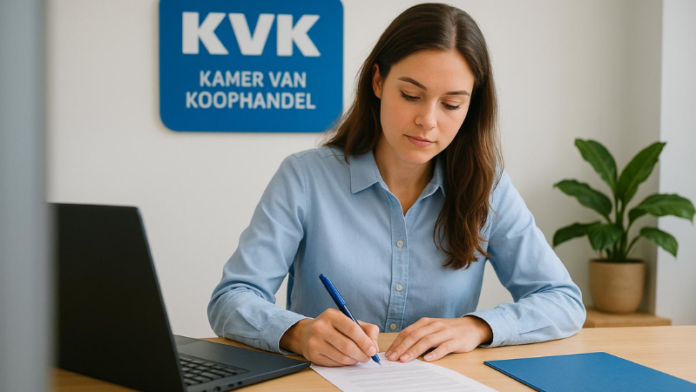
Most businesses in the Netherlands need to register with the KVK (Netherlands Chamber of Commerce) in the Dutch Business Register.
You’ll provide information about your business, including its name, activities, legal structure, and address.
The exact procedure depends on your chosen structure. For example, setting up a BV involves a civil-law notary.
Once your registration is completed, KVK passes your information to the Dutch Tax Administration. In many situations, this means you don’t need to separately register your business with the Tax Administration.
This is one of the key milestones: you’re no longer just planning a business. You’re officially setting one up.
10. Understand VAT and Other Taxes
Taxes are something you should understand before your first sale, not after your first tax bill arrives.
Depending on your business structure and activities, you may have obligations involving VAT, income tax or corporate income tax.
If you’re considered a VAT entrepreneur, you’ll receive the relevant VAT identification details from the Dutch Tax Administration.
The exact tax treatment depends on your circumstances, so don’t assume that another business’s tax situation will be identical to yours.
If you’re unsure, speak with a Dutch tax professional. Getting the basics right from the beginning is much easier than correcting years of mistakes later.
11. Think About Insurance
When you’re an employee, your employer handles many risks behind the scenes.
When you’re running your own business, those risks become your responsibility.
Depending on what you do, you may want insurance such as:
- Business liability insurance
- Professional indemnity insurance
- Disability insurance
You should also consider preparing clear general terms and conditions for customers.
These documents can explain things such as payment terms, responsibilities, cancellations and other important conditions.
You don’t necessarily need every possible insurance policy. The right coverage depends on your business and the risks you’re exposed to.
12. Build Your Website and Start Finding Customers
Once the legal side is under control, it’s time to concentrate on what really keeps a business alive: customers.
Create a website that makes your business easy to understand.
A potential customer should quickly be able to answer:
What do you sell? Who is it for? How much does it cost? Why should I trust you? How can I contact you?
Don’t underestimate networking either.
Your first customer might come through a friend, former colleague, industry event, or professional connection rather than a Google search.
Reach out to people. Attend events. Talk about your business. Build relationships.
You don’t need thousands of customers on day one. You need your first few genuine customers, and then you need to learn from them.
13. Don’t Forget About Your Own Future
When you’re busy building a business, retirement can feel like a problem for another decade.
It isn’t.
As a self-employed person, you don’t automatically build a pension in the same way an employee does. That’s why it’s worth thinking about retirement planning early.
Even if you start with a small contribution, creating the habit early can make future planning much easier.
Starting a Business in the Netherlands as a Foreigner

The Netherlands is also an attractive destination for international entrepreneurs.
However, if you’re coming from outside the EU, EEA or Switzerland, don’t assume that registering a company automatically gives you the right to live and work in the country.
Your immigration and residence requirements depend on your nationality and personal circumstances.
You may also need to consider your Dutch business address, registration requirements, banking arrangements, and tax position.
If you’re planning to move specifically to build a business, check the immigration requirements before making major financial commitments.
How Much Does It Cost to Start a Business in the Netherlands?
There is no single answer.
A freelancer working from home might start with relatively little money. A restaurant, retail store, or manufacturing company could require a much larger investment.
Your highest costs will depend on your business model.
Instead of searching for a universal “startup cost,” create your own budget covering:
Setup costs + monthly operating costs + personal living costs + emergency buffer.
That number will tell you much more about what you actually need.
Conclusion
It’s not necessary to have everything flawless before launching a firm in the Netherlands in 2026. It’s about completing the crucial tasks in the proper sequence.
Start with a concept you are familiar with. Use actual customers to test it. Understand your numbers. Select a legal framework that is appropriate for your circumstances. Take care of taxes and registration. Then focus your efforts on creating something that people genuinely desire.
Although the paperwork could help you get off the ground, it won’t help you grow your firm.
FAQ
Do I have to register my business with KVK?
Most businesses operating in the Netherlands must register in the Dutch Business Register. The timing and registration procedure depend on your business structure and circumstances.
Can I start a business in the Netherlands as a foreigner?
Yes, but immigration and residence requirements depend on your nationality and circumstances. Non-EU/EEA and Swiss nationals may need an appropriate residence permit.
Is the Netherlands a good place to start a business in 2026?
Yes. The Netherlands has a well-organised business environment and a clear registration system. It can be a good choice for entrepreneurs who have a strong business idea and understand the local market, taxes, and regulations.
How much money do I need to start a business in the Netherlands?
There is no fixed amount. A freelancer working from home may need relatively little, while a restaurant, shop or manufacturing business can require a much larger investment. The best approach is to calculate your setup costs, monthly expenses, and personal living costs before you start.
Can a foreigner start a business in the Netherlands?
Yes, but your situation matters. EU/EEA and Swiss citizens generally have different requirements from entrepreneurs coming from outside those areas. If you are from outside the EU, EEA, or Switzerland, check your residence and work requirements before making major plans.
Do I need a Dutch business address?
Generally, businesses registering in the Netherlands need an appropriate Dutch business address. If you’re planning to work from home, check whether your municipality, landlord, or other applicable rules allow you to operate your particular type of business from that address.
Do I need a business plan to register a company?
Not necessarily. A business plan is mainly useful for you. It helps you understand your customers, competitors, costs, and potential profitability. It can also be useful if you’re looking for financing or investors.
What taxes does a new business in the Netherlands have to pay?
That depends on your legal structure and activities. You may have obligations involving VAT, income tax, or corporate income tax. Your situation determines which taxes apply, so it’s worth understanding your tax position before you start selling.
Do I need an accountant to start a business in the Netherlands?
You don’t necessarily need one, particularly if your business is small and straightforward. However, an accountant or tax adviser can be very helpful when you’re dealing with VAT, payroll, business expenses, or more complicated tax matters.
Do I need insurance as a new entrepreneur?
It depends on your business and the risks involved. Business liability and professional indemnity insurance may be useful, while other types of cover can be relevant depending on your work. Don’t simply buy every policy available; look at the actual risks your business faces.