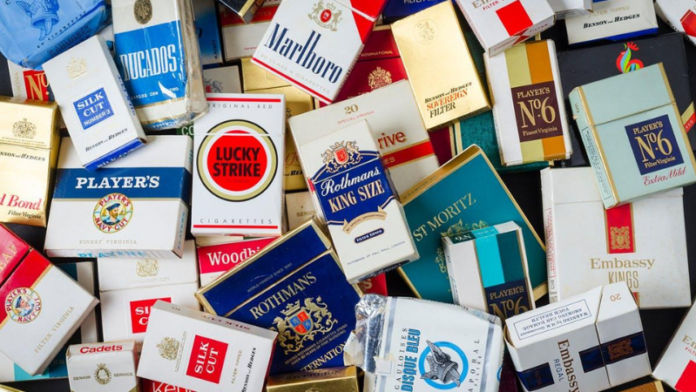
The cigarette industry has changed a lot over the years. Smoking rates, regulations, consumer habits, and the wider tobacco market are all very different from what they were a few decades ago. Even so, some cigarette brands have managed to remain instantly recognizable.
Marlboro, Camel, Dunhill, and Lucky Strike have existed for generations and continue to be linked to the worldwide tobacco industry.
So, which cigarette brands stand out in 2026?
There isn’t one reliable worldwide ranking that determines the seven “best” or biggest cigarette brands based solely on sales. The brands below are therefore best understood as seven well-known cigarette names with notable histories and market presence, rather than as a strict ranking by global sales.
1. Marlboro
Few cigarette brands are as recognizable as Marlboro.
The brand has become one of the most famous names in the tobacco industry, with a presence in markets worldwide. Its strong visual identity and decades of brand recognition have helped it remain at the center of the cigarette market.
Marlboro is part of the Philip Morris International portfolio, one of the world’s largest tobacco companies. The brand has also been sold in a number of varieties over the years, including Marlboro Red and Marlboro 27.
The brand’s biggest strength is arguably its familiarity. Even people who don’t smoke are likely to recognize the Marlboro name and its distinctive branding.
That level of recognition is difficult to build, and it explains why Marlboro continues to be one of the first names people think of when discussing major cigarette brands in 2026.
2. Camel
Camel has another thing that many modern brands would love to have: history.
The cigarette brand has been around for more than a century and has developed a distinctive identity along the way. Its name, packaging, and long-standing presence have made it one of the most recognizable cigarette brands in the international tobacco market.
Camel is associated with the R.J. Reynolds business in the United States and is part of the wider British American Tobacco portfolio following BAT’s acquisition of Reynolds American.
Over the years, Camel has remained particularly recognizable by maintaining a consistent brand identity, even as the surrounding tobacco industry has continued to change.
3. Dunhill
Dunhill takes a different approach from some of the more mainstream cigarette brands.
It has traditionally been positioned at the premium end of the market, with its branding and packaging designed to project a more sophisticated image. That premium identity has helped Dunhill establish a distinct place within the international tobacco industry.
The brand is part of British American Tobacco, which owns a large portfolio of tobacco and nicotine brands across different markets.
Dunhill’s appeal has historically been tied not just to the cigarette itself, but also to the overall image surrounding the brand. Its name has long been associated with premium tobacco products and an upscale presentation.
4. Lucky Strike
Lucky Strike is another name with a remarkably long history.
The brand has been part of the cigarette market for generations and is especially recognizable because of its distinctive visual identity. Its branding has helped it remain memorable even as the tobacco industry has gone through significant changes.
Today, Lucky Strike is part of British American Tobacco’s international portfolio.
The brand has appeared in different forms and markets over the years, but its longstanding identity remains one of its biggest assets. For many people, Lucky Strike is a reminder of how cigarette brands can become deeply embedded in popular culture and commercial history.
5. Rothmans
Rothmans has built its reputation on a more traditional, established image in the cigarette market.
The brand has a long history and has been sold across various international markets. It is now part of British American Tobacco’s wider portfolio, giving it access to the company’s extensive global distribution network.
One of the brand’s names is Rothmans Blue, recognized as one of its product varieties.
Rothmans may not receive the same level of worldwide attention as Marlboro, but its longevity and international presence have helped it remain a familiar name in the tobacco industry.
6. Natural American Spirit
Natural American Spirit has developed a somewhat different identity from many traditional cigarette brands.
The brand is particularly known for its positioning around additive-free tobacco, which has helped distinguish it from competitors. It is associated with Reynolds American and, through that company, with British American Tobacco.
The brand includes varieties such as Natural American Spirit Blue and Black.
However, there’s an important point worth making here: terms such as “natural” or “additive-free” do not mean that cigarettes are safe or harmless. Cigarette smoking carries serious health risks regardless of the way a product is marketed or described.
What makes Natural American Spirit notable from a branding perspective is the way it has created a distinct identity in an industry where many products compete for recognition.
7. Nat Sherman
Nat Sherman is one of the more historic names on this list.
This American brand became particularly associated with premium cigarettes and luxury tobacco products. Its presentation, packaging, and positioning helped create an image quite different from that of the mass-market cigarette brands that dominate much of the industry.
Nat Sherman Classic is one of the products historically associated with the brand.
While its name may not be as universally recognized as Marlboro or Camel, Nat Sherman has an important place in the history of premium American tobacco products. Its reputation was built around exclusivity and a more upscale image rather than mass-market appeal.
A Quick Look at the Seven Brands
| Brand | Known For | Market Position |
| Marlboro | Global recognition and strong brand identity | Mainstream |
| Camel | Long history and distinctive branding | Mainstream |
| Dunhill | Premium image and packaging | Premium |
| Lucky Strike | Heritage and recognizable branding | Mainstream |
| Rothmans | International presence and long history | Mainstream/Premium |
| Natural American Spirit | Additive-free positioning | Distinctive/Alternative positioning |
| Nat Sherman | Luxury-oriented heritage | Premium |
Why Are These Brands Still Recognizable?

One of the most interesting things about the cigarette market is how much brand history matters.
Many of the names people recognize today were established decades ago. They’ve survived changes in consumer preferences, advertising restrictions, packaging regulations, taxation, and increasingly strict tobacco laws.
Brand recognition is only part of the story, though.
Large tobacco companies also benefit from extensive distribution networks and established relationships with retailers. At the same time, the industry has been changing as companies diversify beyond traditional cigarettes and invest in other nicotine and tobacco-related products.
That means being a famous cigarette brand doesn’t necessarily mean being the biggest brand by current sales.
The Companies Behind the Brands
It’s also useful to look at the companies that own or operate these brands because individual cigarette brands are generally part of much larger businesses.
Marlboro is associated with Philip Morris International, which ranked as the largest company in the source’s 2026 tobacco-company market-cap data.
Camel, Dunhill, Lucky Strike, and Rothmans are associated with British American Tobacco, one of the world’s largest tobacco companies.
Natural American Spirit is associated with Reynolds American and the broader British American Tobacco group.
Nat Sherman has historically been associated with Altria’s U.S. tobacco portfolio.
This distinction matters because a company’s market capitalization measures the company’s value, not the value or popularity of a particular cigarette brand.
Conclusion
Marlboro, Camel, Dunhill, Lucky Strike, Rothmans, Natural American Spirit, and Nat Sherman all have something in common: they have built strong identities that have lasted for years.
Some are household names with enormous international recognition. Others have developed more specialized identities around premium positioning or a particular type of consumer appeal.
Still, calling these the “top seven” shouldn’t be taken to mean they are definitively the seven highest-selling cigarette brands worldwide in 2026. There isn’t enough information in the source material to establish that ranking.
These are seven established names that illustrate the variety and history of the cigarette market. And as the tobacco industry continues to evolve, their future will depend not only on traditional cigarette demand but also on the much broader changes taking place across the nicotine market.
FAQ
What are the top cigarette brands in 2026?
Some of the best-known cigarette brands discussed in the source material include Marlboro, Camel, Dunhill, Lucky Strike, Rothmans, Natural American Spirit, and Nat Sherman. This is not a strict global sales ranking, as reliable worldwide 2026 brand-level sales data isn’t provided.
Is Marlboro still one of the most recognized cigarette brands?
Yes. Marlboro remains one of the most recognizable names in the cigarette industry. Its long history and international presence maintain strong brand recognition.
Who owns Marlboro?
Marlboro is associated with Philip Morris International. The company is one of the largest tobacco businesses globally and has a broad portfolio of tobacco and nicotine products.
Who owns Camel cigarettes?
Camel is associated with the R.J. Reynolds business in the United States and is part of the wider British American Tobacco group following BAT’s acquisition of Reynolds American.
What makes the Natural American Spirit different?
Natural American Spirit has built its identity around additive-free tobacco positioning. The brand is particularly recognizable for this marketing approach and its distinctive branding.
Does additive-free mean Natural American Spirit cigarettes are safer?
No. “Additive-free” does not mean that cigarettes are safe or harmless. Smoking cigarettes carries serious health risks regardless of whether a product is marketed as natural or additive-free.