Starbucks may look like a coffee company, but its appeal goes well beyond the drink in the cup.
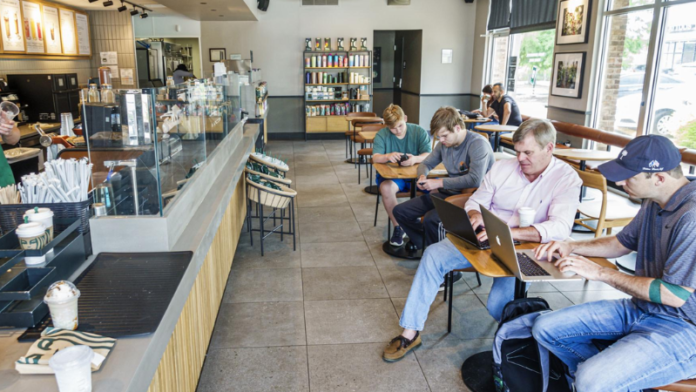
People visit Starbucks to grab coffee on the way to work, meet a friend, study for an exam, work from a laptop, or simply take a break from a busy day. That broader experience is a big part of why the brand has built such a large and loyal customer base.
So, who is Starbucks actually trying to reach?
Its core audience includes younger adults, professionals, students, and other customers who have enough disposable income to regularly pay for a premium coffee experience. The brand also focuses heavily on customers who value convenience, consistency, technology, and having a comfortable place between home and work.
Understanding the Starbucks target market becomes easier when you look at its customers from several angles, including age, income, lifestyle, location, buying habits, and technology use.
Who Is the Main Target Market of Starbucks?
Starbucks does not simply target everyone who drinks coffee.
The source describes its core customer as an urban or suburban adult with disposable income who is willing to pay more for convenience, reliable quality, and the experience associated with the brand. Millennials and Gen Z are especially important to Starbucks, with the main commercial focus described as roughly the 25-to-40 age group.
These customers may be:
- Young professionals
- College students
- Corporate employees
- Entrepreneurs
- Knowledge workers
- Regular coffee drinkers
- People who work or study outside their homes
What connects these groups is not just their interest in coffee. They are also looking for speed, familiarity, a comfortable environment, and an experience they can fit into a busy lifestyle.
How Does Starbucks Segment Its Customers?
Starbucks uses several types of customer segmentation to understand and reach its audience.
| Segmentation type | What Starbucks focuses on |
| Demographic | Age, income, occupation, education |
| Psychographic | Lifestyle, values, identity, experience |
| Geographic | Urban and suburban locations |
| Behavioral | Loyalty, frequency, convenience, buying habits |
| Digital | Smartphone use, mobile ordering, app engagement |
Looking at all of these areas together gives a much clearer picture of the people Starbucks is trying to serve.
What Age Group Does Starbucks Target?
Starbucks has a broad age range, but younger adults sit near the centre of its target market.
The source places the commercial core around ages 25 to 40, primarily Millennials and Gen Z, while the broader audience extends from roughly 22 to 60.
Younger customers may visit Starbucks to study, socialise, meet friends, or use the café as a place to work. Older professionals may be more focused on convenience, routine, and having a dependable coffee option during a busy workday.
This gives Starbucks access to several customer groups without making the brand feel like it belongs to just one generation.
What Income Group Does Starbucks Target?
Starbucks positions its products as a form of affordable luxury.
The typical customer is described as middle-income to upper-middle-income, with enough disposable income to make premium coffee purchases regularly.
That positioning is important.
Starbucks is not trying to compete purely on the lowest price. Instead, customers are paying for a combination of the drink, convenience, brand recognition, store environment, and consistency.
For many customers, spending more on a coffee can feel like a small everyday treat rather than a major financial decision.
Why Are Students and Young Professionals Important to Starbucks?

Students and young professionals fit naturally into the Starbucks model.
In between courses, students might desire a place to study, hang out with their peers, or take a rest. Starbucks can be used by young professionals for informal gatherings, commuting, working remotely, or before work.
The source identifies students, salaried professionals, corporate employees, and entrepreneurs as important parts of the customer base.
These groups also tend to be comfortable with smartphones, digital payments, mobile ordering, and loyalty programmes, which fits closely with Starbucks’ broader digital strategy.
What Does Starbucks Customers’ Lifestyle Look Like?
Starbucks is selling more than coffee.
The brand has long positioned its stores as a place between home and work, often described as a “third place.” Customers can stop by for a drink, spend time with other people, or simply have somewhere comfortable to sit and work.
That makes lifestyle and identity an important part of Starbucks’ positioning.
The source describes the company’s customers as people who may value:
- Convenience
- Quality
- Experience
- Community
- Sustainability
- Social connection
- Reliable service
This helps explain why Starbucks pays so much attention to the design and atmosphere of its stores rather than focusing only on the products it sells.
Why Does Starbucks “Third Place” Matter?
The third-place idea is one of the most recognisable parts of the Starbucks brand.
The basic concept is simple: home is one place, work is another, and Starbucks offers a comfortable environment somewhere in between.
That idea can appeal to customers who want somewhere to meet, relax, study, or work.
The source notes that the company’s leadership has brought the third-place concept back into focus as part of its recent strategy.
This shows that the physical store experience remains an important part of who Starbucks is trying to serve.
Where Does Starbucks Focus Its Target Market?
Starbucks has a global footprint, but geography still plays a major role in its strategy.
The source notes that, at the end of fiscal 2025, Starbucks operated 40,990 stores worldwide, including 16,864 in the United States and 8,011 in China.
Within individual markets, Starbucks tends to focus on locations such as:
- City centres
- Business districts
- College towns
- Transit hubs
- High-traffic areas
- Affluent suburban communities
The basic idea is convenience. Starbucks wants to be located where its customers already spend time rather than forcing them to make a special trip.
Does Starbucks Adapt Its Products for Different Markets?
Yes.
Although Starbucks has a recognisable global identity, the source explains that its menus and store formats can be adapted to local preferences.
This matters because customers in different countries do not necessarily have the same tastes, habits, or expectations.
For example, the company has developed local approaches in China rather than simply copying the exact experience used in every other market.
This gives Starbucks a way to maintain a consistent global brand while still making the business feel relevant in individual markets.
What Buying Habits Define Starbucks Customers?
Starbucks places a strong emphasis on repeat customers.
Many people do not visit only once in a while. They build Starbucks into their daily or weekly routine.
The source highlights loyalty, frequent purchasing, convenience-first behaviour, and mobile ordering as important parts of customer behaviour.
A customer might:
- Order a morning coffee before work
- Pick up a drink through the app
- Visit during an afternoon break
- Use the store for a short work session
- Meet someone there after work
That repeat behaviour is valuable because Starbucks does not have to convince the same customer to make a first purchase every day. The brand is trying to become part of that customer’s routine.
How Does Starbucks Use Its Rewards Programme?
The Starbucks Rewards programme plays an important role in customer retention.
The source states that Starbucks had roughly 34 million active U.S. Rewards members based on the 90-day measure and that Rewards members account for more than half of transactions at company-operated U.S. stores.
A loyalty programme does more than encourage repeat purchases.
It also gives Starbucks information about customer behaviour, preferences, ordering patterns, and engagement.
That information can then support personalised offers and other marketing decisions.
Why Is Technology So Important to Starbucks’ Target Market?
The modern Starbucks customer is often comfortable using a smartphone for ordering, paying, and managing rewards.
The Starbucks app combines several parts of the customer experience, including:
- Mobile ordering
- Digital payment
- Rewards
- Personalised offers
- Customer engagement
The source describes the app as an important part of Starbucks’ digital strategy and notes that it also provides valuable behavioural information about customers.
This means Starbucks is not just targeting a particular type of coffee drinker. It is also targeting customers who are comfortable with a highly digital purchasing experience.
Why Does Starbucks Appeal to Experience-Seeking Customers?
A major part of Starbucks’ value is the experience surrounding the product.
Customers are not simply paying for coffee beans, milk, or syrup. They are also paying for the convenience of the location, the environment, the familiarity of the brand, and the overall experience.
The source describes Starbucks customers as people who often see a visit as a small event rather than a basic transaction. Seasonal drinks, customisable beverages, store atmosphere, and brand identity all contribute to that experience.
This helps explain why Starbucks can maintain premium pricing compared with many lower-cost coffee options.
How Has Starbucks’ Target Market Changed Recently?
The source highlights an important strategic shift through Starbucks’ “Back to Starbucks” direction.
The company has made several changes designed to refocus attention on its core customer.
These include:
- Simplifying the menu
- Redesigning stores
- Putting more emphasis on the café experience
- Changing its open-door policy
- Closing underperforming stores
- Returning greater attention to the coffeehouse experience
Taken together, these moves suggest that Starbucks is trying to concentrate more heavily on customers who value the traditional Starbucks experience rather than simply chasing the highest possible volume.
What Does Starbucks’ Target Market Tell Us About Its Marketing Strategy?
The Starbucks example shows how different parts of a business can be built around the same customer.
Its store locations, mobile app, loyalty programme, menu, store atmosphere, and product pricing all connect back to the type of customer Starbucks wants to attract and retain.
The source describes this as a coherent approach built around an affluent, loyal, experience-focused customer base.
That consistency is one of the most useful lessons for other businesses.
A company does not necessarily need to appeal to everyone. It can be more effective to understand a specific customer group and build the product, experience, and marketing around that group.
What Can Other Businesses Learn From the Starbucks Target Market?
There are several practical lessons here.
Can Businesses Sell More Than Their Core Product?
Yes. Starbucks sells coffee, but it also sells convenience, atmosphere, routine, and an experience.
Why Is It Important to Choose a Clear Customer?
When a business knows exactly who it is serving, decisions about pricing, location, product design, marketing, and customer service can become much easier.
How Can Loyalty Data Help a Business?
Customer loyalty data can reveal purchasing habits and help businesses understand their most valuable repeat customers.
Why Should Businesses Be Willing to Refocus?
Customer expectations change. Even a large, established company may need to simplify its offering and return to the customers who originally made the brand successful.
What Does Starbucks’ Target Market Look Like Overall?
The Starbucks target market can be summarised as follows:
| Category | Core Starbucks audience |
| Age | 25–40 core, with a broader adult audience |
| Income | Middle to upper-middle income |
| Occupation | Students, professionals, corporate employees, entrepreneurs |
| Location | Urban and suburban areas |
| Lifestyle | Busy, convenience-focused, experience-oriented |
| Values | Quality, experience, belonging, sustainability |
| Buying behaviour | Frequent, loyal, convenience-driven |
| Technology | Smartphone-first, comfortable with mobile ordering |
| Main channels | Mobile order, drive-thru, in-store visits |
This summary reflects the segmentation described in the source.
Conclusion
Starbucks’ target market is much more specific than “people who drink coffee.”
Younger adults, professionals, students, and other consumers who appreciate comfort, quality, ease, and technology are the brand’s main target market. Those who have made Starbucks a regular part of their routine rather than sporadic patrons are frequently its most loyal clients.
What makes the strategy particularly interesting is how consistently the different parts of the business support that audience. Store locations, the mobile app, loyalty programme, product range, and café experience all connect back to the same customer profile.
The bigger lesson is useful for almost any business: know who your best customers are and build the business around what they actually value.
Starbucks has built its customer strategy around more than selling coffee. It has created a routine, a place, and a familiar experience that customers are willing to return to again and again.
FAQ
Who Is Starbucks’ Target Market?
Starbucks mainly targets younger adults, professionals, students, and customers with enough disposable income to pay for premium coffee and a comfortable café experience. Millennials and Gen Z are especially important to its customer base.
What Age Group Does Starbucks Target?
The core audience is generally around 25 to 40 years old, although Starbucks serves a broader adult market ranging from roughly 22 to 60.
What Income Group Does Starbucks Target?
Starbucks mainly appeals to middle- and upper-middle-income customers. Its pricing and positioning treat coffee as an affordable luxury rather than a basic low-cost purchase.
Does Starbucks Target Students?
Yes. Students are an important part of the Starbucks customer base, particularly those looking for a convenient place to study, meet friends, or spend time between classes.
Why Does Starbucks Target Young Professionals?
Young professionals often value convenience, consistency, and locations that fit naturally into their workday. Starbucks’ mobile ordering, pickup, and café environment fit well with this lifestyle.
Where Does Starbucks Target Customers?
Starbucks tends to focus on urban and suburban locations, including business districts, college towns, transit areas, city centres, and affluent neighbourhoods.
What Is the Starbucks “Third Place” Strategy?
The third-place idea refers to Starbucks serving as a comfortable space between home and work. Customers may visit to meet people, study, work, relax, or simply enjoy a coffee.
How Does Starbucks Use Customer Segmentation?
Starbucks looks at customers through demographic, psychographic, geographic, behavioural, and digital factors. This helps the company tailor its products, locations, marketing, and customer experience.
How Does Starbucks Use Customer Loyalty Data?
The Starbucks Rewards programme encourages repeat purchases while also giving the company useful information about customer behaviour. The source notes roughly 34 million active U.S. Rewards members under its 90-day measure.
Why Is the Starbucks App Important to Its Target Market?
The app brings together mobile ordering, payments, rewards, and personalised offers. It fits the habits of customers who prefer a fast, smartphone-based purchasing experience.
Does Starbucks Target Tech-Savvy Customers?
Yes. Digital convenience is an important part of the Starbucks customer experience, especially for people who regularly use smartphones for ordering, payment, and loyalty programmes.
Why Does Starbucks Focus on Customer Experience?
Starbucks is selling more than coffee. Its stores, branding, customisable drinks, convenience, and atmosphere all contribute to an experience that encourages customers to return regularly.
How Has Starbucks’ Target Market Strategy Changed?
The source highlights the “Back to Starbucks” strategy, which focuses more strongly on coffee, store experience, loyal customers, simpler menus, and the traditional café environment.
What Can Businesses Learn From Starbucks’ Target Market?
One key lesson is to understand your most valuable customers and build the product, pricing, location, and customer experience around what they actually value. Starbucks shows how a clear customer focus can shape an entire business.