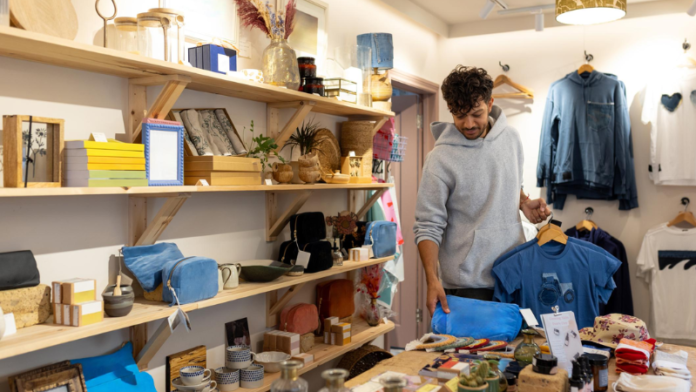
Starting a retail business can be an exciting way to turn an idea, product, or passion into a real source of income. Whether you want to open a small specialist shop, sell products online, operate from a market stall, or build a business that combines physical and online retail, there are plenty of ways to enter the retail world.
But retail is not simply about finding a product and putting a price on it. You need to understand your customers, choose the right products, manage your money carefully, find the right location or sales channel, and be prepared to compete.
The good news is that you do not have to start with a huge operation. Many successful retail businesses begin with a focused idea and grow gradually as they learn what customers actually want.
If you are wondering how to start a retail business in the UK, this guide walks through the key steps, from choosing your retail concept to managing inventory, pricing products, selecting a location, and building a business that can adapt as the market changes.
What Is a Retail Business?
A retail business sells products or services directly to consumers for personal or household use. Traditionally, this has meant buying products from manufacturers, wholesalers, distributors, agents, or other suppliers and selling them to customers at a higher price.
The difference between the selling price and the costs of running the business creates the retailer’s profit.
Retail today can take many forms. You could operate a traditional shop, sell through an online store, use a market stall, run a vending business, or combine several channels.
This flexibility is one of the biggest attractions of retail entrepreneurship.
Types of Retail Businesses You Can Start
Before investing money, think about what type of retail business best suits your skills, budget, customers, and preferred way of working.
Store-Based Retail
A traditional shop gives customers a physical place to browse products and make purchases. Depending on your idea, this could be a clothing shop, convenience store, electronics business, homeware shop, beauty retailer, specialist food store, or another niche operation.
A physical shop can create a strong customer experience, but it also comes with expenses such as rent, utilities, staffing, maintenance, insurance, and inventory.
Specialty Retail
Specialty retail focuses on a specific customer group, product category, or interest.
Instead of trying to sell everything to everyone, you might concentrate on a carefully selected range of products.
This approach can help a small retailer compete with larger businesses because customers may value specialist knowledge, personal service, carefully chosen products, and a more enjoyable shopping experience.
Online Retail
An online retail business allows you to sell without relying entirely on a physical shop.
You can sell through your own website, an online marketplace, social media, or a combination of channels.
Online retail can reduce some of the costs associated with a physical location, although you still need to consider inventory, packaging, delivery, marketing, website costs, customer service, returns, and payment processing.
Market Stalls and Pop-Ups
A market stall or pop-up shop can be a useful way to test a retail idea before committing to a permanent location.
It allows you to interact directly with customers and see which products attract attention.
For a new entrepreneur, this can provide valuable real-world feedback before making a larger investment.
Vending Retail
Vending machines offer another retail model. The basic idea is straightforward: place products in locations where customers are likely to want them and make purchasing convenient.
The location matters enormously. A good product in a poor location may struggle, while the right product in a high-traffic location can perform much better.
Is Retail the Right Business for You?

Retail can look simple from the outside, but running a business means managing many responsibilities at once.
You may need to handle customers, suppliers, employees, inventory, marketing, finances, landlords, and unexpected problems all within the same week.
Before starting, ask yourself a few honest questions.
Are You Comfortable Multitasking?
As a business owner, you cannot always say, “That’s not my job.”
One day you may be ordering stock. Next, you could be dealing with a customer complaint, checking your accounts, arranging a delivery, or promoting a product online.
Being able to switch between responsibilities is an important part of running a small retail business.
How Comfortable Are You With Risk?
Retail involves uncertainty.
You need to choose the right products, set sensible prices, understand your customers, and respond when circumstances change.
Some products may sell quickly while others remain on the shelves. Customer preferences can change, competitors can enter your market, and costs can increase.
You need to be comfortable making decisions without having every outcome guaranteed.
Can You Handle an Irregular Income?
A new business may not provide a reliable personal income immediately.
Money that comes into the business may need to go straight back into inventory, rent, marketing, staffing, equipment, or other operating costs.
It is important to understand this before committing your savings to the venture.
Are You a Self-Starter?
When you run your own retail business, you are responsible for keeping things moving.
There may not be a manager reminding you what needs to be done. You need to make decisions, solve problems, and stay motivated even when business is slower than expected.
Do You Enjoy Working With People?
Retail is ultimately about customers.
You will meet people with different expectations, personalities, budgets, and preferences. Being approachable, flexible, patient, and willing to listen can make a significant difference.
Step 1: Choose Your Retail Business Idea
Ask yourself the simplest question:
What are you going to sell, and who are you going to sell it to?
Avoid choosing a product simply because you personally like it.
A strong retail idea should solve a problem, satisfy a need, create convenience, or give customers something they genuinely want.
Think about:
- What products will you sell?
- Who is most likely to buy them?
- Why would customers choose you?
- What alternatives already exist?
- What makes your offer different?
- Will customers buy once or return regularly?
- Can you make a reasonable margin after your costs?
The goal is not necessarily to invent something completely new. Many successful businesses take an existing product or service and present it in a more convenient, specialised, attractive, or customer-friendly way.
Step 2: Research Your Market
Market research can save you from making an expensive mistake.
Look at the customers you want to serve and the businesses already serving them.
Study your competitors carefully. Visit their shops, browse their websites, look at their products, compare prices, and pay attention to how they communicate with customers.
- What do competitors do well?
- Where are customers unhappy?
- Are there products people struggle to find?
- Is there an underserved customer group?
- What price points are common?
- What could your business do differently?
Your goal is to identify a genuine opportunity rather than simply copying another retailer.
Step 3: Decide How You Will Sell
You do not necessarily need to choose between physical and online retail.
Depending on your business, you could combine several approaches.
For example, you might operate a physical shop while also selling online. Another retailer may begin through a website or market stall before considering permanent premises.
The important thing is to choose a sales model that aligns with your customers and available resources.
Step 4: Create a Business Plan
A business plan gives your idea structure.
You do not need to make it unnecessarily complicated. The important thing is to understand how your business is supposed to work financially and operationally.
Consider these factors before planning:
- Concept of your Retail
- Your target customers
- Your products
- Your competitors
- Your pricing approach
- Your suppliers
- Your sales channels
- Your marketing strategy
- Your expected startup costs
- Your ongoing expenses
- Your expected sales
- Your inventory requirements
- Your growth plans
A business plan can also help you spot weaknesses before you spend money.
Step 5: Work Out Your Startup Budget
One of the biggest mistakes new retailers make is underestimating how much money they need.
Your budget may need to cover the following factors:
- Initial inventory
- Premises or workspace
- Equipment
- Shop fittings
- Website and technology
- Packaging
- Marketing
- Staff
- Insurance
- Professional services
- Utilities
- Delivery and transportation
- Working capital
Do not spend your entire budget on opening day.
A new business needs breathing room because unexpected expenses are almost inevitable.
Step 6: Find the Right Location
If you are opening a physical shop, location can have a major impact on your performance.
It’s important to choose the right location for your business; consider these factors:
- How many potential customers live nearby?
- How much foot traffic does the area receive?
- Is the location easy to reach?
- Parking or public transport?
- What businesses are nearby?
- Who are your competitors?
- What are the rental costs?
- Is the area growing or declining?
- Does the location suit your target customer?
Do not judge a location only by how it looks during one visit. Visit at different times and on different days.
Also consider the landlord and the lease carefully. Speaking with current or previous tenants can sometimes reveal practical information that you would not discover during a viewing.
Step 7: Plan Your Store Layout
Once you have your location, think about how customers will experience it.
- Walk into the shop as if you were a first-time customer.
- Is it immediately clear what the business sells?
- Can customers move around comfortably?
- Are your best products easy to see?
- Is the checkout convenient?
A good retail layout should make shopping feel natural rather than confusing.
Keep related products together where appropriate. You can also place popular or high-margin products in areas where customers naturally spend more time.
Your layout should also allow you to monitor the store and reduce opportunities for theft.
And don’t be afraid to experiment. Movable displays and flexible fixtures can make it easier to change the store as you learn more about your customers.
Step 8: Choose Your Products Carefully
Inventory is one of the most important parts of retail.
Your products are what customers come to buy, so purchasing the wrong stock can tie up your money and reduce your cash flow.
Do not buy products simply because a supplier offers you an attractive deal.
Instead, think about:
- What your customers actually want
- Which products complement each other
- How quickly products are likely to sell
- How much capital each category requires
- Your expected profit margin
- Your available storage
- How often you can reorder
Start with a clear buying plan and stick to it.
Overstocking one category can leave you short of money for other products that customers actually want.
Step 9: Set Your Retail Prices
Pricing is about more than adding a markup to your purchase cost.
You need to consider your overall expenses and what customers are willing to pay.
Look at competitor pricing, supplier costs, operating expenses, expected sales volume, and your desired margin.
A product may have a good markup but still be a poor business choice if it sells very slowly.
Likewise, a lower-margin product may be valuable if it sells frequently and brings customers into your store.
The right pricing strategy should balance customer expectations with the financial needs of your business.
Step 10: Find Reliable Suppliers
Your suppliers can directly affect your customer experience.
So, it’s important to choose the right supplier because it directly affects your business, consider:
- Product quality
- Wholesale pricing
- Minimum order requirements
- Delivery times
- Payment terms
- Returns
- Reliability
- Availability of popular products
Do not automatically choose the cheapest supplier. A dependable supplier can be worth more than a slightly cheaper supplier who regularly causes problems.
Step 11: Make Your Retail Business Easy to Find
A great shop still needs customers.
Your marketing strategy should make people aware of your business and give them a reason to visit or buy.
Depending on your retail model, you might use:
- A professional website
- Social media
- Local marketing
- Email marketing
- Online advertising
- Promotions
- Events
- Partnerships with complementary businesses
- Customer referrals
Your marketing does not always have to be expensive.
A clear brand, good product photography, useful content, friendly service, and consistent communication can go a long way.
Starting a Retail Business From Home

Not every retail business requires a traditional shop.
Depending on the nature of your products and the applicable local requirements, you may be able to start from home and sell through online channels, markets, fairs, or other sales platforms.
The main advantage is lower overhead.
However, a home-based retailer needs to consider storage, deliveries, packaging, customer visits, and whether the property is suitable for commercial use.
A home-based model can be a useful way to test demand before taking on the costs of permanent retail premises.
Should You Start From Scratch or Buy an Existing Business?
There are two broad routes into retail: building your own business or purchasing an existing one.
Starting From Scratch
Starting from scratch gives you complete control over your concept, branding, products, pricing, location, and customer experience.
The downside is that you also have to build everything yourself.
You start without an established customer base or proven sales history, so there can be more uncertainty.
Buying an Existing Retail Business
Buying an existing business can give you a head start.
You may acquire an established location, existing customers, inventory, employees, supplier relationships, and a trading history.
But you should never assume that an existing business is automatically a good investment.
Investigate why the owner is selling.
Review its financial performance, customer base, competition, location, supplier arrangements, inventory, and future prospects before committing your money.
What About a Retail Franchise?
A franchise can provide another route into retail.
Instead of developing everything yourself, you operate under an established brand and business model.
Depending on the agreement, you may receive training, operational guidance, marketing support, and access to established systems.
The trade-off is that you typically have less independence than an entirely independent retailer and may need to pay an initial fee and ongoing costs.
A franchise can make sense for someone who wants a structured model, while starting independently may appeal more to an entrepreneur who wants complete control.
Common Mistakes New Retailers Should Avoid
Starting a retail business becomes much easier when you know what can go wrong.
Choosing Products Without Research
Your personal preference does not necessarily represent customer demand.
Research before buying significant quantities.
Underestimating Costs
Opening costs are only part of the financial picture. Make sure you have enough working capital to keep the business running.
Choosing a Poor Location
Low rent is not always a bargain if the location makes it difficult for customers to find or access you.
Buying Too Much Inventory
Excess stock ties up money and can eventually become obsolete or difficult to sell.
Ignoring Online Retail
Even if you operate a physical store, customers increasingly expect businesses to have an online presence.
Trying to Compete Only on Price
Small retailers often cannot beat large businesses on price alone.
Instead, compete through specialisation, service, convenience, product selection, expertise, and customer experience.
Failing to Adapt
Retail changes constantly.
Customer preferences, technology, competitors, and buying habits can all shift.
The retailers who pay attention and adapt have a better chance of staying relevant.
Conclusion
Starting a retail business in the UK is not about finding a guaranteed winning product or opening a shop and hoping customers arrive.
It starts with understanding what people want and building a business around that demand.
Take time to research your market, choose your products carefully, understand your numbers, and think seriously about where and how you will sell. If you open a physical shop, location and layout matter. If you sell online, your website, customer experience, fulfilment, and marketing become especially important.
Most importantly, do not underestimate the realities of running a business. Retail requires patience, flexibility, financial discipline, and a willingness to learn from customers.
You do not need to build a huge retail operation on day one. Start with a clear concept, control your costs, understand your customers, and improve as you gain experience. A small, well-managed retail business can provide a much stronger foundation for growth than a large business built without proper planning.
FAQ
What is the best retail business to start in the UK?
The right retail business depends on your skills, budget, customer demand, competition, and your understanding of the products. A focused specialty retailer can be a good starting point because it lets you concentrate on a specific customer segment or product category.
Can I start a retail business from home?
A home-based retail business is possible, depending on what you sell and the requirements that apply to your location and business activity. It can reduce overhead costs and provide a way to test your idea before investing in a permanent shop.
How important is location for a retail business?
Location can be extremely important for a physical retailer. Customer traffic, accessibility, nearby businesses, competition, parking, demographics, rent, and the area’s future development can all influence a location’s potential.
What makes a small retail business successful?
A successful retailer usually understands its customers, manages inventory carefully, controls costs, provides a good customer experience, chooses products thoughtfully, and adapts when market conditions change. Consistency and patience matter just as much as the original business idea.