
The word startup is everywhere these days. You hear it in conversations about technology, business, investment, innovation, and entrepreneurship.
A startup is generally a young business created to develop an innovative product or service, solve a problem in a new way, disrupt an existing market, or even create a completely new market. Startups often begin with small teams, limited resources, and a strong focus on growth.
That is what makes startups different from many traditional small businesses. A local shop may be created to serve an existing group of customers and become profitable as quickly as possible. A startup, on the other hand, often spends more time developing and testing an idea with the intention of growing it on a much larger scale.
So, what exactly makes a company a startup?
What Is a Startup Company?
A startup company is a new or young business founded by entrepreneurs who want to bring an innovative idea, product, service, or business model to the market.
The goal is often bigger than simply opening a business and earning an income. Startups may try to solve an existing problem in a completely different way, introduce new technology, or create a product that changes how people do something.
Because the idea may be new, there is usually a lot of uncertainty. Founders may not yet know exactly how customers will respond, how quickly the company will grow, or how much money will ultimately be required.
This combination of innovation, growth potential, and uncertainty is a big part of the startup experience.
How Is a Startup Different From a Small Business?
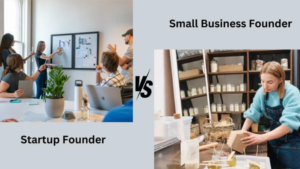
A startup and a small business can both begin with one person and a good idea, but their goals are often different.
A traditional small business usually enters an existing market and focuses on building a stable company that can generate revenue and become self-sufficient.
A startup is more likely to focus on innovation, rapid growth, and scalability. It may spend a longer period developing a product and testing the market before reaching profitability.
| Area | Startup | Small Business |
| Main goal | Rapid growth and innovation | Sustainable, steady business |
| Market | May create or disrupt a market | Usually serves an existing market |
| Profitability | May take longer to reach profitability | Often aims for earlier profitability |
| Funding | Often seeks outside investment | May rely more on traditional financing |
| Growth | Designed to scale quickly | Usually grows at a steadier pace |
| Risk | Generally higher uncertainty | Usually more predictable |
The important point is that not every new business is a startup. A new business becomes more startup-like when innovation, scalability, and rapid growth are central to its strategy.
What Are the Main Characteristics of a Startup?
Although startups can look very different from one another, they often share several common characteristics.
How Important Is Innovation to a Startup?
Innovation is usually at the heart of a startup.
The company may be building a new product, using technology in a different way, introducing a new business model, or finding a better solution to an existing problem. Early resources are often directed heavily toward product development and testing.
Innovation does not always mean inventing something that has never existed before. Sometimes it means making an existing process faster, simpler, cheaper, or more convenient.
Why Do Startups Focus on Scalability?
A startup is often built with growth in mind from the beginning.
The idea is to create a business model that can serve many more customers without costs increasing at exactly the same rate. Technology and automation can help make that possible.
For example, a software product can potentially be sold to customers in many locations without opening a physical store in every city.
Do Startups Have High Growth Potential?
Growth is a major part of the startup model.
The source explains that startups can grow quickly by reaching a large market, offering a unique product, building a strong team, and securing enough capital to support the business as it develops.
Of course, high growth potential does not mean rapid growth is guaranteed.
A startup still has to prove that customers want the product and that the business can operate sustainably.
How Does Technology Support Startups?
Technology plays an important role in many startups.
It can be the product itself, or it can support activities such as market research, customer acquisition, data analysis, communication, and business operations.
This is one reason technology startups can sometimes scale quickly. Digital tools can help small teams perform work that would otherwise require much larger resources.
Why Do Startups Need Outside Funding?
Many startups need capital to develop their product, hire employees, market their business, and continue operating while they work toward profitability.
The source identifies several funding options, including founder funding, loans, angel investment, venture capital, crowdfunding, and government grants.
Not every startup uses all of these options. The right choice depends on the company’s stage, financial situation, and growth plans.
What Are the Different Types of Startups?
There is no single startup model.
Different startups are built for different purposes, and the source identifies several common categories.
What Is a Scalable Startup?
A scalable startup is designed for rapid growth.
Its business model is usually built around expanding the customer base, using technology or automation, and securing the financing needed to support that growth. The source gives companies such as Slack and Dropbox as examples.
What Is a Buyable Startup?
A buyable startup is created with the possibility of being acquired by a larger company.
In this model, founders may focus strongly on creating an innovative product or technology that could become attractive to another business. The source uses Instagram as an example of a startup that was eventually acquired by Facebook.
What Is an Offshoot Startup?
An offshoot startup is created as a spin-off from an established company.
It may receive financial or other support from the parent organization while operating independently with a startup-style approach.
What Is a Social Startup?
A social startup focuses on solving social problems.
These companies can use technology, creative ideas, or new business models to address issues that affect communities or society. They may operate as nonprofits or as for-profit businesses with a strong mission.
What Challenges Do Startup Companies Face?
Starting a company around a new idea can be exciting, but it also comes with plenty of uncertainty.
The source highlights several challenges that founders commonly face.
How Does Competition Affect Startups?
Startups may find themselves competing with other new companies, as well as established businesses that already have money, customers, and strong market positions.
A startup therefore has to offer something that gives customers a reason to pay attention and switch from existing solutions.
Why Is Raising Money Difficult for Startups?
Getting funding is often a major challenge.
Investors need to understand why the idea has potential and how the company plans to grow. Founders may also need to raise additional funding as the business enters new stages of development.
Fundraising can take considerable time and effort, which can be difficult for a small team that is already trying to build the product.
Why Is Hiring So Important?
Startups often operate with lean teams, which means every employee can have a significant impact.
At the same time, convincing talented people to join a young company can be difficult because startups often involve uncertainty. Founders also need to maintain team morale when the business experiences setbacks.
What Does It Mean to Scale Sustainably?
Growth sounds great, but growing too quickly can create problems.
A startup may spend money faster than it can generate revenue, hire too many people, or expand before its processes are ready.
The source points out that startups need to find the right balance. Growing too fast can put pressure on financial resources, while growing too slowly can allow competitors to move ahead.
How Do Startups Get Funding?
Funding can come from different sources depending on the company’s stage.
What Is Bootstrapping?
Bootstrapping means funding the startup yourself.
Founders may use their personal savings or income from another business to pay for early development. This approach can give founders time to create prototypes, conduct research, and develop a business plan before seeking outside investment.
What Are Angel Investors?
Angel investors are individuals who invest their own money in startups, typically in exchange for equity.
They may also provide advice, industry knowledge, and useful connections that can help the startup develop.
What Is Venture Capital?
Venture capital comes from firms that invest money raised from investors into startups.
VC funding is often larger than angel investment, and investors may receive a larger ownership stake and have a more active role in important business decisions.
How Does Crowdfunding Work?
Crowdfunding allows startups to raise smaller amounts of money from a large number of people, often through online platforms.
Depending on the campaign, supporters may receive rewards, early product access, or equity. Crowdfunding can also help a startup build an early community of customers and supporters.
Can Startups Receive Government Grants?
Some startups may qualify for government grants, particularly when they operate in certain sectors or meet specific program requirements.
Grants do not usually need to be repaid, but the application process can be competitive and time-consuming.
How Do You Start a Startup Company?
Launching a startup is not about having a perfect idea on day one.
The process usually involves testing the idea, learning from customers, building a workable product, and gradually improving the business.
How Do You Find and Validate a Startup Idea?
Start with a real problem.
Ask what people struggle with, what existing products fail to do well, and whether your proposed solution would actually make life easier or better.
The source recommends market research, prototype development, testing, gathering feedback, and refining the idea before committing significant resources.
This stage can save you from spending too much money on a product nobody wants.
Why Do You Need a Business Plan?
A business plan brings the idea into a practical framework.
It should explain the startup’s goals, product or service, target market, revenue model, financial projections, and launch strategy. It can also help when you approach investors for funding.
What Is an MVP?
An MVP, or minimum viable product, is the simplest version of a product that can be introduced to customers.
The purpose is to test whether people actually want the product before spending heavily on a complete version. Customer feedback from the MVP can then be used to improve the product and shape the next stage of the business.
An MVP does not need to be perfect. It needs to be useful enough to test your main idea.
When Should a Startup Raise Funding?
Funding needs usually change as the company grows.
Early-stage founders may use their own money, but startups often seek outside investment when they need additional resources for product development, hiring, marketing, or expansion.
The important thing is to understand how much money is required for each stage rather than raising capital without a clear purpose.
What Happens When a Startup Starts Scaling?
Once the product begins gaining traction, the focus shifts toward growth.
That may involve expanding the customer base, improving the product, increasing marketing, generating leads, and strengthening sales processes.
At this stage, technology can become especially useful for managing customer information, communication, marketing, analytics, and team collaboration.
What Tools Can Help a Startup Grow?

Startups often have small teams, so the right tools can make everyday work much easier.
The source highlights several categories of tools that can support growing businesses.
| Tool Category | What It Helps With |
| Project management | Organizing tasks and tracking progress |
| Sales and marketing automation | Managing campaigns and sales activities |
| Website builder | Creating an online presence or ecommerce store |
| Communication tools | Team communication and collaboration |
| Analytics tools | Tracking performance and understanding data |
| Cloud storage | Storing and sharing files securely |
The goal is not to use as many tools as possible. It is to choose tools that solve actual problems without making the business unnecessarily complicated.
Why Are Startups Important to the Economy?
Startups can contribute to innovation, employment, productivity, and economic growth.
They introduce new ideas, challenge established ways of doing things, and sometimes create entirely new markets.
Some startups remain relatively small, while others grow into major companies that influence entire industries.
That potential is one reason startups attract entrepreneurs, investors, employees, and customers.
What Makes a Startup Successful?
There is no guarantee that a startup will succeed, even if the original idea is excellent.
A strong idea still needs market demand, good execution, enough funding, a capable team, and the ability to adjust when customers or market conditions change.
The source emphasizes the importance of validating the idea, building an MVP, securing suitable funding, and scaling carefully.
In other words, starting the company is only the beginning. Founders have to keep learning and adapting as the business develops.
Conclusion
A startup company is more than a business that has just opened its doors.
It is usually built around an idea which aims to solve a problem in a new way; it introduces innovation, disrupts an existing market, or creates something entirely new. Startups often operate with small teams, external funding, significant uncertainty, and a strong focus on growth and scalability.
The journey can involve a lot of trial and error. Founders need to validate their ideas, listen to customers, manage money carefully, build the right team, and decide when it makes sense to scale.
That is what makes startup companies both challenging and interesting. The business may begin with a simple idea, but with the right product, market, people, and execution, that idea can grow into something much larger.
FAQ
What is a startup company?
A startup is a new or young company that has started to develop an innovative product, service, or business model. It aims to solve a real problem differently, disrupt a market, or create a new one.
Is every new business a startup?
No. A new small business usually enters an existing market and focuses on becoming profitable and sustainable. A startup typically places more emphasis on innovation, scalability, and rapid growth.
What are the main characteristics of a startup?
Common characteristics include innovation, scalability, high growth potential, the use of technology, external funding, and a higher level of risk and uncertainty.
What is bootstrapping in a startup?
Bootstrapping means founders use their own savings or income to finance the early stages of the business. It can give them time to develop and test an idea before seeking outside funding.
Why is market research important for startups?
Market research helps founders understand the problem they are trying to solve, learn about customers, test their ideas, and improve the product before committing significant resources.