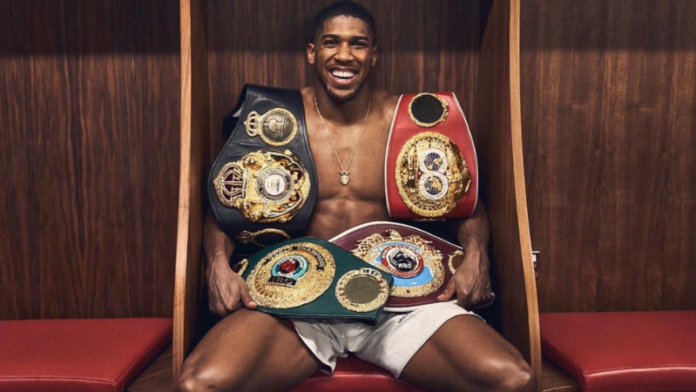
Anthony Joshua is more than a heavyweight boxing champion. Over the past decade, the British fighter has built himself into one of the biggest commercial names in the sport, turning Olympic success, world titles, blockbuster fights, sponsorships, and business ventures into a substantial personal fortune.
Joshua’s financial story is very inspiring, as boxing purses aren’t his only source of income. His largest fights have brought him tens of millions of dollars at a time, and he has made extra money outside the ring through business ventures and sponsorship deals.
From winning Olympic gold in 2012 to becoming one of boxing’s most marketable heavyweight stars, Joshua has turned his sporting success into a powerful personal brand.
Anthony Joshua Net Worth in 2026
As per the report, his estimated net worth is $150 million
Anthony Joshua has accumulated his wealth through several major income streams:
- Professional boxing purses
- Pay-per-view and event-related earnings
- Sponsorship and endorsement agreements
- Business investments
- Real estate and other assets
- Commercial ventures associated with his brand
How Anthony Joshua Built His Fortune
Joshua began boxing at a very young age. He was a bricklayer before turning pro in boxing. He subsequently entered amateur boxing, where he made rapid progress because of his athletic prowess and tenacity.
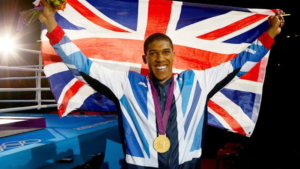
The turning point came at the 2012 London Olympics, where Joshua won a gold medal for Great Britain.
That victory gave him the platform to turn professional and begin building what would become a global boxing brand.
The Wladimir Klitschko Fight Changed Everything
One of the most important moments in Joshua’s career came in April 2017 when he faced former heavyweight champion Wladimir Klitschko at Wembley Stadium.
The fight was a major commercial event and became one of the defining contests of Joshua’s early career.
Joshua survived a difficult challenge and ultimately stopped Klitschko in the 11th round. The victory strengthened his reputation as a legitimate heavyweight champion and, just as importantly from a business perspective, proved that he could headline huge stadium events.
That distinction matters.
A world-class boxer can win titles without necessarily becoming a major commercial attraction. Joshua managed to combine both. He became a champion who could also sell tickets, attract television audiences, generate sponsorship interest, and headline major international events.
That combination dramatically increased his earning potential.
Andy Ruiz Jr. Rematch Produced a Career-High Payday
Joshua’s financial journey took another major step in 2019.
His first fight against Andy Ruiz Jr. at Madison Square Garden ended in a stunning upset. Ruiz knocked Joshua down multiple times before stopping him in the seventh round.
For a fighter whose brand had been built around dominance and championship success, the defeat was a major setback.
But Joshua responded in a way that ultimately strengthened his commercial value.
Six months later, he returned for the rematch in Saudi Arabia and regained his heavyweight titles with a unanimous decision.
According to the source material, Joshua earned approximately $57.5 million from the rematch, making it his largest reported payday at the time.
The story was bigger than the paycheck. Joshua demonstrated that a defeat did not automatically destroy his marketability. Instead, the comeback created another major event and gave fans a compelling reason to watch.
From a business standpoint, that resilience became an important part of his brand.
Usyk Losses Did Not Destroy Joshua’s Earning Power
Joshua later faced Oleksandr Usyk twice.
The first meeting took place in 2021, when Usyk outboxed Joshua over 12 rounds and won the unified heavyweight titles. Joshua had another opportunity in their 2022 rematch, but Usyk again came out on top.
Two consecutive losses would have seriously damaged the commercial prospects of many fighters.
Joshua, however, remained a major attraction.
His second fight against Usyk reportedly generated approximately $40.6 million for Joshua. That is a useful illustration of how established Joshua had become as a commercial asset.
His earning power was no longer dependent solely on an undefeated record.
He had become a recognizable global sports personality whose name itself could help sell a major fight.
Anthony Joshua’s Endorsement Income
Boxing has been Joshua’s primary wealth generator, but sponsorships have helped turn his sporting fame into a broader commercial brand.
Over the years, he has been associated with major companies and brands, including:
- Under Armour
- Beats by Dre
- Hugo Boss
Joshua’s appeal to sponsors is easy to understand.
He combines elite athletic performance with a recognizable image, international fan base, and strong visibility in one of the world’s most commercially valuable combat sports.
For an athlete, that creates opportunities beyond the fight purse.
A boxing match may generate a large one-time payment, while a long-term sponsorship agreement can provide another source of income and strengthen the athlete’s overall brand.
Anthony Joshua and the 258 Group
Joshua has also worked to build his financial future outside boxing through business.
His commercial interests have included ventures connected with 258 Group, the business organization associated with his career and investments.
This is an important part of understanding Joshua’s net worth.
Professional boxing can produce extraordinary income, but a fighter’s career is relatively short. Building businesses and investing earnings can create wealth opportunities after an athlete is no longer competing regularly.
Anthony Joshua’s Early Life
Anthony Joshua was born on October 15, 1989, in Watford, Hertfordshire, England.
His mother, Yeta, is Nigerian, while his father, Robert, has Nigerian and Irish heritage. Joshua also spent part of his childhood in Nigeria, where he attended the Mayflower School in Ikenne.
After his parents divorced when Joshua was 12, he returned to the United Kingdom.
He was naturally athletic and excelled in sports. Before boxing became his career, he was particularly talented at athletics and football.
What makes his story unusual is how late he started boxing compared with many professional fighters.
Joshua began boxing at approximately 18 years old.
That did not stop him from progressing rapidly.
From Bricklayer to Olympic Champion
Before boxing made him wealthy, Joshua worked as a bricklayer.
His amateur career eventually took him to the highest level of international competition.
Joshua won the 2012 Olympic gold medal in London, giving him the perfect launchpad for a professional career.
After the Olympics, he turned professional in 2013.
His early professional run was extraordinary. Joshua won his first 20 fights, all by knockout, quickly establishing himself as one of the most exciting young heavyweights in the sport.
That combination of athletic ability, knockout power and personality helped him become a major attraction.
Anthony Joshua’s Professional Career
Joshua’s professional career has included victories over some of the biggest names in heavyweight boxing.
Some of his notable opponents are:
- Wladimir Klitschko
- Carlos Takams
- Joseph Parker
- Alexander Povetkin
- Andy Ruiz Jr.
- Oleksandr Usyk
- Jermaine Franklin
- Robert Helenius
- Francis Ngannou
The Klitschko victory was arguably the defining early moment of his career.
The Ruiz Jr. rivalry then showed his ability to recover from adversity.
The Usyk fights represented another challenging chapter, while the victories that followed helped Joshua rebuild his momentum.
His ability to remain commercially relevant throughout these different phases has played a major role in his financial success.
Anthony Joshua’s Financial Strategy
Joshua’s story offers an interesting lesson from a business perspective.
Elite athletes can earn enormous amounts of money, but high income does not automatically create long-term wealth.
His wealth comes from multiple sources such as:
- Fight income
- Sponsorships
- Business interests
- Brand value
Anthony Joshua’s Net Worth vs. Career Earnings
It is important to understand the difference between net worth and career earnings.
Career earnings refer to the money an athlete has generated over the course of their professional career.
Net worth is an estimate of what the person owns minus what they owe.
That means Joshua could have earned hundreds of millions of dollars while maintaining a much lower net worth.
Taxes, management fees, promoters, trainers, travel, training camps, investments, personal expenses, and other costs can significantly reduce the amount of money an athlete ultimately retains.
This is why reports of enormous boxing purses should not simply be added together and described as personal wealth.
What Makes Anthony Joshua So Valuable?
Joshua’s commercial appeal comes down to more than his record.
He has several qualities that make him particularly valuable as a sports business personality:
- Recognition
- Heavyweight appeal
- International audience
- Comeback story
- Marketability
- Business potential
Is Anthony Joshua One of the Richest Boxers?

Yes, based on the estimated $150 million net worth cited in the source material, Joshua is among the wealthiest boxers of his generation.
His fortune reflects both his sporting success and his commercial appeal.
Importantly, his financial position has remained strong despite losing some of the biggest fights of his career. That is a sign of how powerful his brand has become.
Conclusion
Anthony Joshua’s financial journey is a story of much more than boxing purses.
He started boxing relatively late, worked as a bricklayer, won Olympic gold, became a heavyweight champion, and eventually developed into one of the most commercially successful fighters of his era.
His biggest fights have produced enormous paydays. Sponsorships have added another layer of income, while business interests have helped him think beyond the relatively short lifespan of a professional boxing career.
The numbers may change as Joshua’s career continues, but the broader financial lesson is already clear: Joshua has successfully turned boxing fame into a diversified business and personal brand.
For Joshua, the real achievement may ultimately be bigger than any single knockout or championship belt. He has built a financial platform designed to keep working long after his final professional fight.
FAQ
What is Anthony Joshua’s net worth?
Anthony Joshua’s estimated net worth is around $150 million, as per reports.
How much has Anthony Joshua earned from boxing?
Joshua has earned hundreds of millions of dollars in fight purses and bonuses over the course of his professional career. Some of his biggest reported paydays came from fights against Andy Ruiz Jr., Oleksandr Usyk, and Francis Ngannou.
What was Anthony Joshua’s biggest payday?
One of Joshua’s biggest reported fight paydays came from his 2019 rematch with Andy Ruiz Jr., for which he earned an estimated $57.5 million. The fight took place in Saudi Arabia and saw Joshua reclaim his heavyweight titles.
How much did Anthony Joshua make fighting Oleksandr Usyk?
Joshua reportedly earned about $40.6 million for his second fight against Oleksandr Usyk in August 2022. Although Joshua lost the bout by decision, the fight was still one of the most lucrative events of his career.
How does Anthony Joshua make most of his money?
Boxing is still the biggest part of Joshua’s income. Major heavyweight fights can bring him tens of millions of dollars from purses and related earnings. On top of that, he has made money from brand partnerships, endorsements, investments, and business ventures.
Does Anthony Joshua earn money even when he loses a fight?
Yes. A boxer does not only get paid for winning. Joshua can earn a substantial purse simply for stepping into the ring, especially when he is involved in a major event. That is one reason his losses to fighters such as Oleksandr Usyk did not stop him from earning huge amounts.
What fight made Anthony Joshua the most money?
Joshua’s rematch with Andy Ruiz Jr. in 2019 is widely reported as one of his biggest career paydays. He reportedly earned around $57.5 million for the fight in Saudi Arabia, where he regained his heavyweight titles.
Why are Anthony Joshua’s fight earnings so high?
It comes down to his ability to attract attention. Joshua has Olympic credentials, world championship experience, a huge international following, and a history of headline fights. Promoters can build major events around his name, which gives him greater negotiating power when contracts are discussed.
Is Anthony Joshua richer because of his Olympic gold medal?
The Olympic gold medal itself did not make Joshua a multimillionaire. Its real value was what came afterward. The 2012 Olympic victory helped establish his reputation and gave him a powerful platform when he entered professional boxing.
How much did Anthony Joshua make after becoming a world champion?
His earnings increased dramatically once he became one of the leading names in heavyweight boxing. Major title defenses against fighters such as Wladimir Klitschko, Carlos Takam, Joseph Parker, and Alexander Povetkin helped move his career earnings into the eight-figure range for individual events.
Did the Andy Ruiz loss hurt Anthony Joshua financially?
The first Ruiz fight was a major sporting setback, but it did not destroy Joshua’s earning power. The rematch became an enormous commercial event, and Joshua reportedly earned one of the largest paydays of his career when he defeated Ruiz in Saudi Arabia.
What is Anthony Joshua’s biggest source of wealth outside the ring?
There is no single outside-the-ring source identified as larger than all others in the provided material. His commercial income has come from a combination of endorsements, sponsorships, investments, and business ventures.
Why do different websites give different Anthony Joshua net worth figures?
That is normal with celebrity net worth estimates. Joshua’s private finances are not fully public, and websites may use different assumptions about fight purses, endorsements, taxes, property, investments, and expenses. For that reason, a net worth figure should be treated as an estimate, not an audited number.