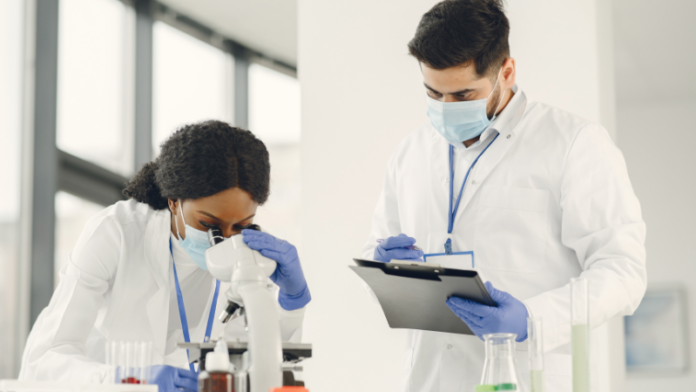
For decades, the standard drug development model was dominated by monolithic pharmaceutical companies. Today, the landscape is rapidly diversifying. Driven by urgent global health needs and monumental leaps in technology, healthcare startups are stepping up to the plate.
These smaller biotech startups operate with a distinct advantage: agility. Unencumbered by the bureaucratic red tape of giant corporations, they can pivot quickly, adopt new technologies overnight, and focus intensely on niche or previously “undruggable” diseases.
Why the Shift?
- Hyper-Specialization: Startups often focus entirely on a single therapeutic area or a specific proprietary technology.
- Technological Integration: Younger companies are born “digital-first,” effortlessly merging biology with software.
- Risk Tolerance: Startups are inherently built to take calculated risks on unproven but highly promising scientific concepts.
How Technology is Rewriting the Rulebook
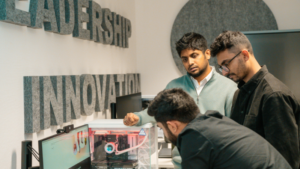
The most significant differentiator for modern drug discovery startups is their tech stack. We are actively witnessing the transition of computational vs traditional drug development. In the past, scientists relied heavily on trial-and-error chemistry. Today, silicon is just as important as glass beakers.
AI and Computational Power
Artificial Intelligence is the undisputed game-changer in modern therapeutics. Instead of manually screening thousands of compounds, researchers are now deploying generative AI for novel molecule design. By training algorithms on vast databases of known chemical structures, AI can “hallucinate” or invent entirely new molecules perfectly tailored to bind to specific disease receptors.
This computational approach is vastly improved by protein folding simulation software. Programs like AlphaFold have unlocked the 3D structures of nearly all known proteins, allowing scientists to understand exactly how a drug might interact with a target cell.
But finding a drug that works is only half the battle; ensuring it doesn’t harm the patient is equally vital. To address this early on, startups utilize machine learning for toxicity prediction. By predicting potential adverse effects in a computer simulation before a drug is even synthesized, companies save millions of dollars and avoid catastrophic failures later in human trials.
Lab Automation and High-Throughput Screening
Beyond the computer screen, the physical laboratory is also evolving. The impact of automation on laboratory workflows cannot be overstated. Robotic arms, automated liquid handlers, and smart sensors now perform repetitive tasks with flawless precision, 24/7.
When this automation is paired with high-throughput screening technologies, a startup can test tens of thousands of chemical compounds against biological targets in a matter of days. The ultimate result of merging AI and robotics is dramatically reducing drug development cycle times, turning a process that once took years into one that takes months.
Tackling the Hardest Challenges in Biology
Technology is a powerful tool, but it must be pointed at the right biological problems. The success of any drug discovery venture relies on a deep understanding of human biology and genetics.
Pinpointing the Right Targets
Everything begins with identifying promising therapeutic targets. A “target” is usually a protein or gene associated with a specific disease. Startups are currently leveraging massive genomic databases to find unique targets for cancers, rare genetic disorders, and autoimmune diseases.
Precision and Personalization
We are moving away from the “one-size-fits-all” approach to medicine. Today’s innovators are heavily invested in precision medicine and personalized therapeutics. By understanding the specific genetic makeup of a patient’s tumor or disease profile, startups can develop drugs that work exceptionally well for specific subpopulations, leading to higher efficacy and fewer side effects.
Furthermore, CRISPR gene editing applications in therapy have moved from academic curiosity to viable clinical programs. Startups utilizing CRISPR are not just treating symptoms; they are actively attempting to rewrite faulty genetic code to cure diseases at their very root.
Surviving the Clinical Gauntlet
The most heartbreaking and expensive part of medicine creation is seeing a drug fail after years of work. Overcoming high failure rates in clinical trials is the holy grail for biotech. By utilizing the aforementioned AI toxicity predictions, better target identification, and precision patient selection, startups are significantly de-risking their clinical trials. By the time a modern startup puts a drug into a human patient, they have a much higher statistical probability of success than the historical average.
The Business Side: Funding, Regulatory Mazes, and Partnerships

Brilliant science is useless without the capital to fund it and the strategic know-how to bring it to patients. The business mechanics of drug discovery startups are unique, complex, and highly collaborative.
Fueling Innovation: The Financial Engine
A common question among those looking at this industry is: how do biotech firms fund research when they might not see a single dollar of revenue for ten years?
The answer lies in specialized startup funding. Because the capital requirements are enormous—often requiring tens of millions just to reach human trials—these companies rely heavily on biotech investment from sophisticated venture capitalists.
The current biotechnology venture capital landscape is characterized by investors who employ their own teams of PhDs and scientists to evaluate startup pitches. Funding usually comes in staged rounds (Seed, Series A, Series B), with each round tied to a specific scientific milestone, such as successfully proving a drug works in animal models or passing Phase 1 safety trials.
Actionable Tip for Biotech Founders: When pitching to venture capitalists, don’t just sell the science. Clearly outline your path to clinical milestones, your intellectual property strategy, and how your computational models concretely save time and money.
Navigating the Regulatory Landscape
No matter how innovative a drug is, it must pass rigorous government safety standards. In the United States, a critical bottleneck for any startup is navigating the FDA investigational new drug application (IND).
Filing an IND requires compiling mountains of preclinical data, manufacturing details, and clinical trial protocols to prove to the FDA that the drug is safe enough to test in humans. Startups must build regulatory strategy into their business plans from day one, often hiring specialized consultants to ensure their lab data will meet strict federal standards.
The Power of Big Pharma Collaborations
Very few drug discovery startups take a medicine all the way from initial concept to commercial pharmacy shelves on their own. Instead, the ecosystem relies heavily on pharmaceutical partnerships with emerging biotechs.
Large legacy pharma companies have massive clinical trial infrastructure, global distribution networks, and deep pockets. Startups have the disruptive technology, speed, and novel drug candidates. This creates a perfect symbiotic relationship.
Often, a startup will develop a drug up through early human trials, at which point a giant pharmaceutical company will step in to co-develop, license, or completely acquire the startup. These strategic partnerships are a primary exit strategy for founders and a vital lifeline that ensures breakthrough medicines actually reach the patients who need them.
Conclusion
The era of slow, monolithic drug creation is fading, giving way to a vibrant, tech-enabled renaissance in medicine. Drug discovery startups are the vanguard of this movement. By merging the biological sciences with generative AI, lab automation, and precision genetics, these companies are fundamentally changing how we heal the human body.
While the challenges—ranging from complex biology and stringent FDA regulations to massive capital requirements—remain daunting, the potential rewards are unprecedented. As venture capital continues to fuel this space and major pharmaceutical companies actively seek out agile partners, the startup ecosystem will continue to thrive. Ultimately, this rapid innovation means that safer, more effective, and highly personalized treatments will reach patients faster than ever before in human history.