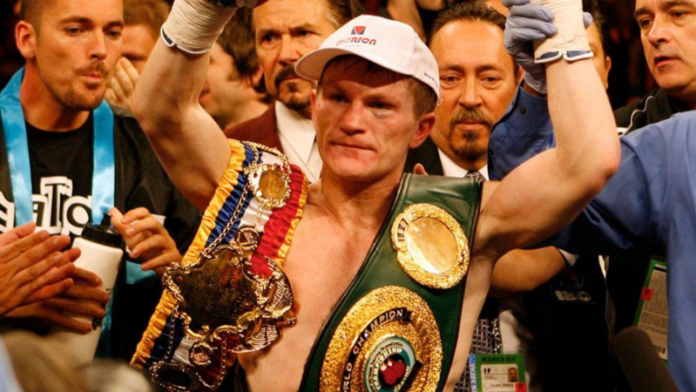
Ricky Hatton built his name the old-fashioned way: by working hard, fighting tough opponents and earning the loyalty of boxing fans along the way. The British boxing star became one of the most recognizable fighters of his generation, winning world titles and headlining major fights against names such as Floyd Mayweather Jr. and Manny Pacquiao.
At the time of his death in September 2025, Ricky Hatton’s net worth was estimated at around $40 million (approximately £30 million–£35 million), as per reports.
How Much Was Ricky Hatton Worth?
Ricky Hatton had an estimated net worth of about $40 million when he died in 2025.
That figure reflects the financial success he built during and after his boxing career. Hatton was not simply a fighter who earned money every time he entered the ring. He turned his popularity into a wider business career that included promotions, training, endorsements and media work.
His biggest financial years came during his years competing at the highest level. Hatton became a major attraction in the United Kingdom and eventually established himself as an international boxing star.
Ricky Hatton Career Earnings
Hatton’s boxing career generated approx $65 million. The figure contributes to the explanation of how he accumulated such a large wealth during the course of a roughly 15-year professional career.
Of course, boxing income is not the same as personal wealth. Fighters have to cover training expenses, managers, promoters, taxes, travel and other costs. Hatton’s estimated net worth therefore represents the value he accumulated over time rather than simply adding up every fight purse.
He also benefited from commercial opportunities that came with becoming one of Britain’s biggest boxing names.
His income sources included:
- Professional boxing purses and bonuses
- Pay-per-view and major-event earnings
- Sponsorships and endorsements
- Media and television appearances
- Boxing promotion
- Training and coaching
- Business activities connected to the sport
The Manny Pacquiao Fight Was a Major Financial Moment
Hatton’s 2009 fight against Manny Pacquiao remains one of the most important events of his career, even though it ended in a devastating defeat.
The fight took place at the MGM Grand Garden Arena in Las Vegas and attracted enormous worldwide attention. Hatton entered the contest as one of Britain’s biggest boxing stars, while Pacquiao was rapidly becoming one of the sport’s global icons.
Hatton reportedly earned around $20 million from the fight.
Financially, it was a huge opportunity. Professionally, however, the night ended badly for Hatton. Pacquiao stopped him in the second round, handing Hatton the second loss of his career.
The defeat forced Hatton to step away from boxing for several years. He eventually returned in 2012, but another loss to Vyacheslav Senchenko brought his professional career to an end.
Ricky Hatton’s Boxing Career
In 1997, Hatton considered it professionally. He quickly developed a reputation for pressure fighting, physical strength, and an aggressive style that made his fights exciting to watch.
One of the defining moments of his career came in 2005, when he defeated Kostya Tszyu to win the IBF and Ring Magazine light-welterweight titles.
The victory transformed Hatton from a successful British fighter into an international star.
Later that year, he defeated Carlos Maussa and added another major world title to his collection.
Hatton eventually moved up to welterweight and defeated Luis Collazo for the WBA title in 2006.
His career record was eventually marked by three defeats, but those losses came late in his career. For much of his prime, Hatton was one of the most difficult fighters in the world to beat.
Ricky Hatton vs. Floyd Mayweather Jr.
In 2007, Hatton faced Floyd Mayweather Jr. in one of the biggest fights of his career.
The matchup attracted huge attention because both fighters entered the bout undefeated. Hatton had built a reputation as an aggressive pressure fighter, while Mayweather was already regarded as one of boxing’s most technically gifted defensive fighters.
Hatton started strongly but eventually struggled against Mayweather’s movement, accuracy and defensive skills.
Mayweather stopped him in the 10th round.
Although Hatton lost his unbeaten record, the fight elevated his profile even further. It also showed how commercially valuable his name had become. A fighter does not need to win every major event to benefit financially from being part of one.
Hatton’s Final Fight and Retirement
After losing to Pacquiao in 2009, Hatton remained away from the ring for more than three years.
He eventually announced a comeback in 2012, returning against Vyacheslav Senchenko. Hatton looked competitive early in the fight, but Senchenko stopped him in the ninth round.
Hatton immediately announced his retirement.
It was not the ending he would have wanted in terms of competition, but his overall career was already firmly established. He had won world championships, fought some of the biggest names in boxing and built a fan base that remained loyal long after he stopped competing.
Ricky Hatton as a Boxing Promoter
One of Hatton’s smartest career moves was remaining involved in boxing after retirement.
He founded Hatton Promotions, a boxing promotion company designed to help develop and promote fighters. The company worked with several professional boxers, including Martin Murray, Matty Askin, Denton Vassell and Zhanat Zhakiyanov.
This was an important step from a business perspective.
Instead of relying entirely on his own boxing career, Hatton used his reputation and experience to create opportunities within the sport. Promotion allowed him to stay connected to boxing while building another potential source of income.
It also helped establish him as more than a former world champion. Hatton became part of the business side of the sport.
Ricky Hatton’s Work as a Trainer
Hatton also became involved in coaching and training fighters.
He worked with several boxers after his own retirement, including Zhanat Zhakiyanov and Nathan Gorman. He was also associated with Tommy Fury during Fury’s development as a professional boxer.
Training gave Hatton another way to use the knowledge he had accumulated during a career at the highest level.
For former athletes, this can be an important transition. Instead of leaving the sport completely, they can turn experience, relationships and reputation into a second career.
Hatton did exactly that.
Ricky Hatton’s Other Sources of Income
Boxing was the foundation of Hatton’s wealth, but it wasn’t the only source.
As his popularity grew, Hatton became a recognizable public figure in Britain and overseas. That created opportunities outside the ring.
Some other Sources of Ricky Hatton:
Sponsorships and Endorsements
Successful fighters can earn substantial amounts from brands that want access to their audience. Hatton’s popularity made him an attractive figure for commercial partnerships during his peak years.
Television and Media
Hatton also appeared in media and entertainment projects. In 2008, he hosted his own live talk show, “Ricky Speaks,” on Nuts TV.
His personality made him particularly well suited to television because fans already knew him as a straight-talking and energetic character.
Boxing Promotion
Hatton Promotions gave him a role on the business side of professional boxing and allowed him to work with emerging fighters.
Coaching
Training other fighters provided another income stream while allowing Hatton to remain active in the sport he knew best.
Ricky Hatton’s Early Life
Ricky Hatton was born on October 6, 1978, in Stockport, England.
He grew up in Hyde, Greater Manchester, in a working-class family. Football was part of the family’s background. His father and grandfather were involved in the sport, and Hatton even tried football himself when he was younger.
Boxing eventually became his real passion.
Hatton joined a local boxing club and began developing the skills that would eventually take him to the professional level. Before becoming a full-time fighter, he also worked in his family’s carpet business.
Ricky Hatton’s Amateur Boxing Career
Hatton enjoyed a successful amateur career before turning professional.
He won seven British titles and represented England at the 1996 AIBA Youth World Boxing Championships.
His amateur career also left him frustrated after a controversial semifinal defeat. That experience helped reinforce his decision to move into professional boxing.
At just 18 years old, Hatton began his professional journey.
The rest became British boxing history.
Ricky Hatton’s Life After Boxing
Hatton’s life after retirement was not simply about stepping away from the sport.
He remained involved in boxing through promotion and training while maintaining a strong connection with his fans.
He also spoke publicly about personal struggles, including depression and alcohol.
That honesty became another part of his public legacy.
Hatton was not presented as someone whose life was perfect after achieving fame and money. Instead, his story showed that success can come with its own challenges.
Ricky Hatton’s Death
He died on September 14, 2025, at the age of 46. The boxing community was startled by his passing, especially since it was said he was preparing for a bout to make a comeback.
Fighters, promoters, fans, and athletes from all around the world sent their respects after learning of his passing.
Ricky Hatton’s Legacy
Hatton’s financial story is impressive, but his real legacy goes beyond the estimated $40 million net worth.
He went from a working-class background in Greater Manchester to becoming a world champion and one of Britain’s most commercially successful boxers. He fought some of the biggest names in modern boxing, earned major purses and later created opportunities for other fighters through promotion and coaching.
From a business perspective, Hatton’s career also offers an interesting lesson: his earning power did not end when his boxing career did.
He built a personal brand, used his experience to enter promotion and training, and remained connected to the audience that had supported him throughout his career.
Conclusion
Ricky Hatton’s net worth shows her years of success. His biggest fight purses provided the foundation, while endorsements, promotion, training and media work helped broaden his income.
But perhaps the most important part of his story is how he built that success. Hatton started with humble roots, became a world champion and eventually used his name and experience to help shape the next generation of boxers.
FAQ
How much money did Ricky Hatton make from boxing?
Reports estimate that Hatton earned approximately $65 million in boxing purses and bonuses throughout his professional career.
How much did Ricky Hatton make fighting Manny Pacquiao?
Hatton reportedly earned around $20 million from his 2009 fight against Manny Pacquiao, making it one of his biggest career paydays.
Was Ricky Hatton a world champion?
Yes. Hatton won multiple world titles, particularly at light welterweight, and also captured a world championship at welterweight.
When did Ricky Hatton retire?
Hatton initially stepped away from boxing after his 2009 loss to Manny Pacquiao. He returned in 2012 and permanently retired after losing to Vyacheslav Senchenko.
Did Ricky Hatton own a boxing business?
Yes. Hatton founded Hatton Promotions, a boxing promotion company that worked with several professional fighters.
Did Ricky Hatton become a boxing trainer?
Yes. After retiring, Hatton trained and worked with several professional fighters, using his experience as a former world champion.
Who did Ricky Hatton lose to?
Hatton finished his professional career with three defeats. His losses came against Floyd Mayweather Jr., Manny Pacquiao and Vyacheslav Senchenko.
What was Ricky Hatton’s biggest boxing achievement?
One of his biggest achievements came in 2005, when he defeated Kostya Tszyu to win major light-welterweight titles and establish himself as one of the world’s best fighters.
What made Ricky Hatton so popular?
Hatton’s aggressive fighting style, Manchester roots, and outspoken personality helped him develop a huge following. His fans became known for creating an electric atmosphere at his fights.
Did Ricky Hatton earn money outside boxing?
Yes. In addition to fight purses, Hatton earned money through sponsorships, endorsements, media appearances, boxing promotion and coaching.
What is Ricky Hatton best remembered for?
He is best remembered as a former world champion, a major British boxing attraction and a fighter who competed against elite names such as Floyd Mayweather Jr. and Manny Pacquiao.